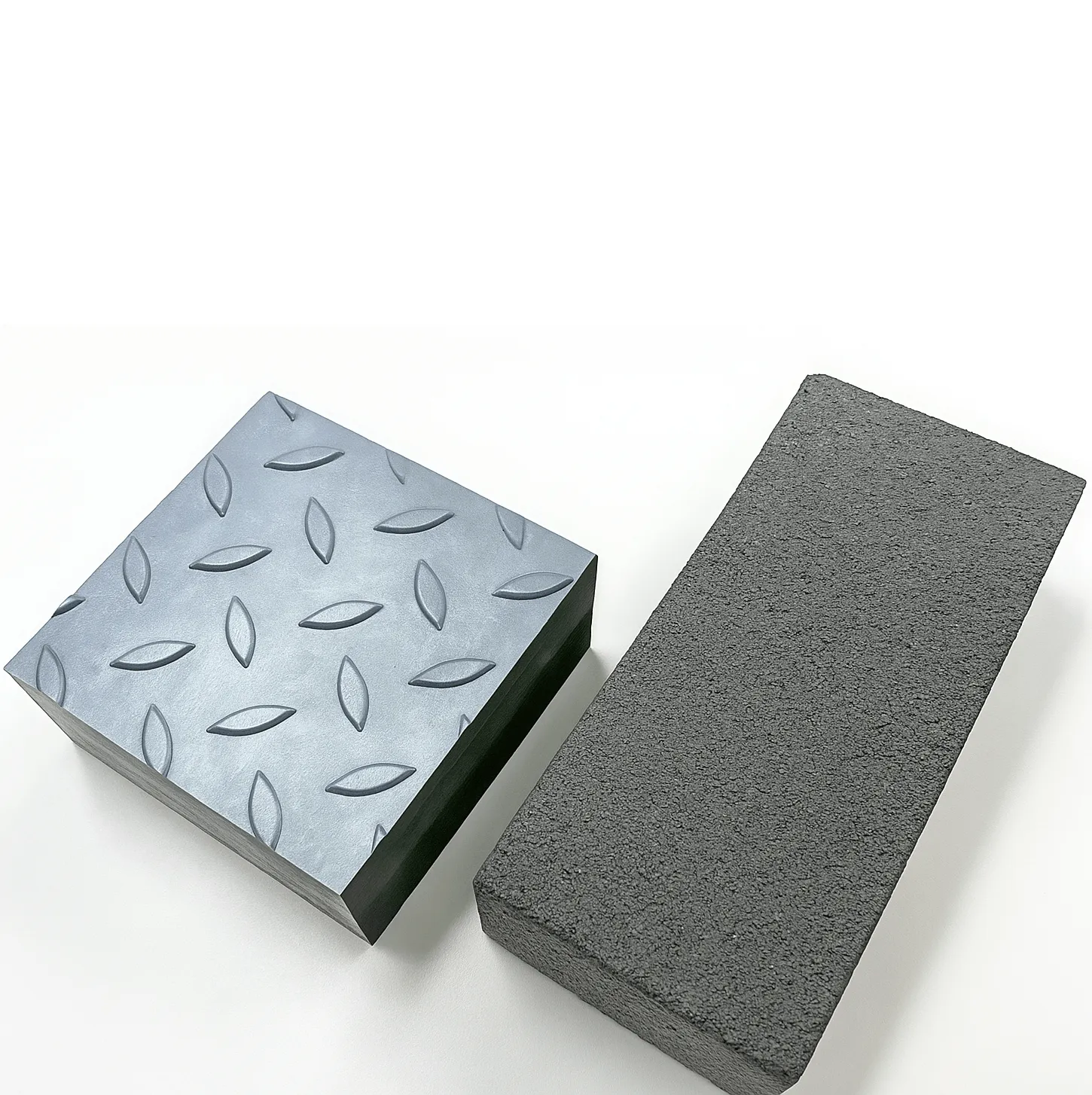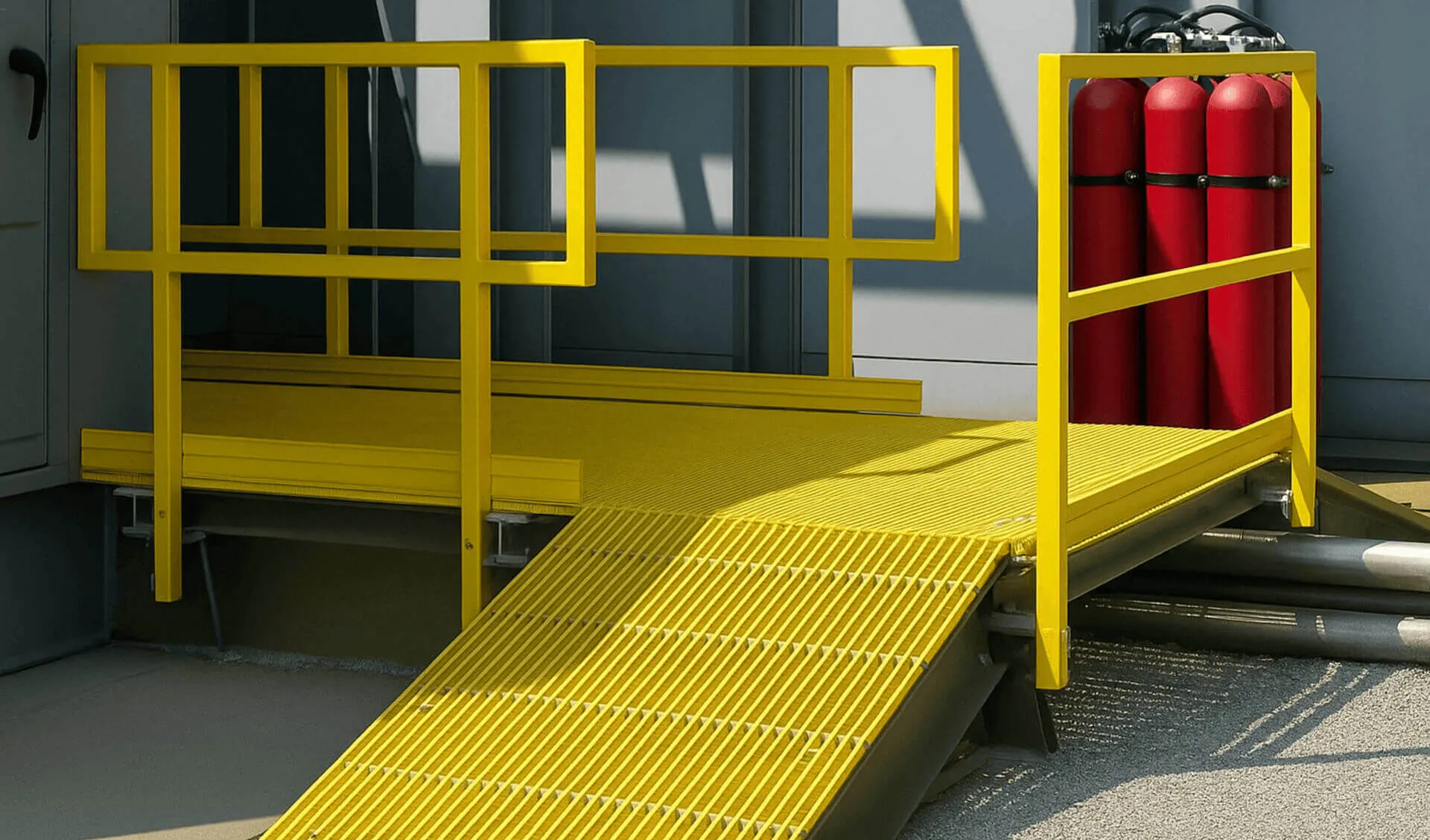
FRP gratings, also called GRP or fiberglass gratings, are open-mesh floor panels made from glass fibre and resin. They are used wherever a steel grating would rust, conduct electricity or be too heavy to handle. This guide lists the main uses in Indian plants and the grade that suits each one, so you can shortlist the right panel before asking for a quote.
Where FRP gratings are used: quick list
- Chemical and process plants: walkways, platforms and tank-top access
- ETPs, STPs and wastewater plants: walkways and trench covers
- Refineries, oil and gas terminals: platforms and stair landings
- Power plants and substations: cable trench covers and walkways near live equipment
- Cooling towers: decks and long-span walkways
- Marine, port and coastal sites: jetties, pump houses and platforms
- Food, beverage and pharma units: washdown floors and drain covers
- Stair treads and maintenance platforms in any of the above
- Stormwater and factory drains: gully gratings and trench covers
- Rooftop maintenance walkways
1. Chemical and process plants
Acid, alkali and solvent splashes eat through mild steel gratings in a few years. Use 38×38 mm molded panels (SM 30 or SM 38) in vinyl ester resin for continuous acid, chloride or solvent exposure, with a gritted surface where floors stay wet. See chemical-resistant walkway gratings.
2. ETPs, STPs and wastewater plants
Moisture and H2S gas rust steel walkways and trench covers quickly. Isophthalic resin suits most sewage and effluent areas; move to vinyl ester where the effluent is acidic. For open channels and trenches, panels are cut to the trench width. See trench and drain gratings.
3. Refineries, oil and gas
Here the resin must also meet fire requirements. Specify a fire-retardant isophthalic or vinyl ester grade rated ASTM E84 Class 1 (flame spread 25 or less), or phenolic resin where low smoke is required.
4. Power plants and substations
FRP is electrically non-conductive, so walkways and cable trench covers near live equipment do not need extra insulation. A concave or gritted surface keeps the floor anti-slip.
5. Cooling towers
Cooling tower decks combine constant wet conditions with long spans between supports. Molded panels are best up to about 1,000–1,200 mm spans; beyond that, use pultruded I-bar gratings such as the 38 mm I-15 series, rated for spans up to 1,600 mm.
6. Marine, port and coastal sites
Salt air and spray corrode galvanised and even stainless steel over time. FRP does not rust, so it suits jetties, pump houses and coastal plant platforms. Read FRP vs SS316 in marine and coastal plants.
7. Food, beverage and pharma units
Daily washdown with cleaning chemicals makes steel floors pit and rust, which becomes a hygiene problem. Use isophthalic resin panels, and 20×20 mm mini mesh (MM 30) where small items or heels must not fall through.
8. Stair treads and maintenance platforms
Stair treads are fabricated from the same molded panels as the walkway, so stairs, landings and platforms match. Panels are cut to the platform layout with cutouts for pipes and columns.
9. Drains, gullies and trench covers
FRP drain covers do not rust shut and have no scrap value, so they are not stolen like cast iron. For roads and estates, choose a load class from B125 to D400. See FRP drain covers and gully gratings.
10. Rooftop maintenance walkways
Light, cut-to-size panels give technicians a safe path across roofs without adding much weight to the structure. A 25 mm molded panel is usually enough for foot traffic; confirm the span between supports first.
Which grade for which use
- General walkways: 38×38 mm molded, 30 or 38 mm deep, isophthalic resin
- Acid or chloride exposure: 38×38 mm molded in vinyl ester resin
- Long spans over 1,200 mm: pultruded I-bar, 38 mm deep
- Small items must not fall through: 20×20 mm mini mesh
- Heavy drainage and airflow: 50×50 mm mesh
- Fire-rated areas: fire-retardant (ASTM E84 Class 1) or phenolic resin
Loads, depths and prices for each grade are in the FRP grating size chart, and full span tables are in the load chart and mesh size guide.
Why FRP instead of steel in these places
In every use above, the deciding factor is the environment rather than raw strength: FRP does not corrode, does not conduct electricity, and weighs a fraction of a steel panel. A full comparison is in FRP vs steel (MS/GI) gratings.
Getting the right panel
Send the application, span between supports, expected load and chemicals present. Rawji Exports moulds and pultrudes FRP gratings in Bhiwandi and returns a recommended grade, a cutting plan and a load chart with the quotation. Indicative rates are on the grating price list.