For factories, hospitals, chemical plants and commercial buildings, the choice of door usually comes down to FRP or steel. Both are strong and both last far longer than wood in demanding locations. They fail in different ways, though, and that should decide which one you specify where. This guide compares them honestly.
The short answer
- Choose FRP where doors face moisture, chemical fumes, washdowns or salt air, where hygiene matters, or where daily impacts would dent and chip a steel door.
- Choose steel where the main need is high security, or where a certified fire-resistance door set with a stated duration is required and no FRP door set holds that certification. More on fire below.
1. Corrosion and moisture
Steel doors depend on their paint or powder coating. In bathrooms, cold stores, ETPs, chemical plants, battery rooms and coastal buildings, scratches and fumes let rust start, usually at the bottom edge and around the hinges, and the frame often rusts first. FRP doors do not rust or rot, and FRP frames don't either. The door is unaffected by moisture, steam, cleaning chemicals and chemical fumes, which is why FRP is the usual choice for bathroom and washroom doors and process areas.
2. Dents, impacts and appearance
In hospital corridors, warehouses and schools, doors are hit by stretchers, trolleys, carts and people every day. A steel door dents and its paint chips, and once chipped it starts to rust. An FRP door absorbs those impacts without denting or peeling, and because its colour runs through the gelcoat, scratches don't expose bare metal. Heavy-duty FRP doors come in 35, 40 and 45 mm solid grades, with SS kick plates for the busiest corridors.
3. Hygiene
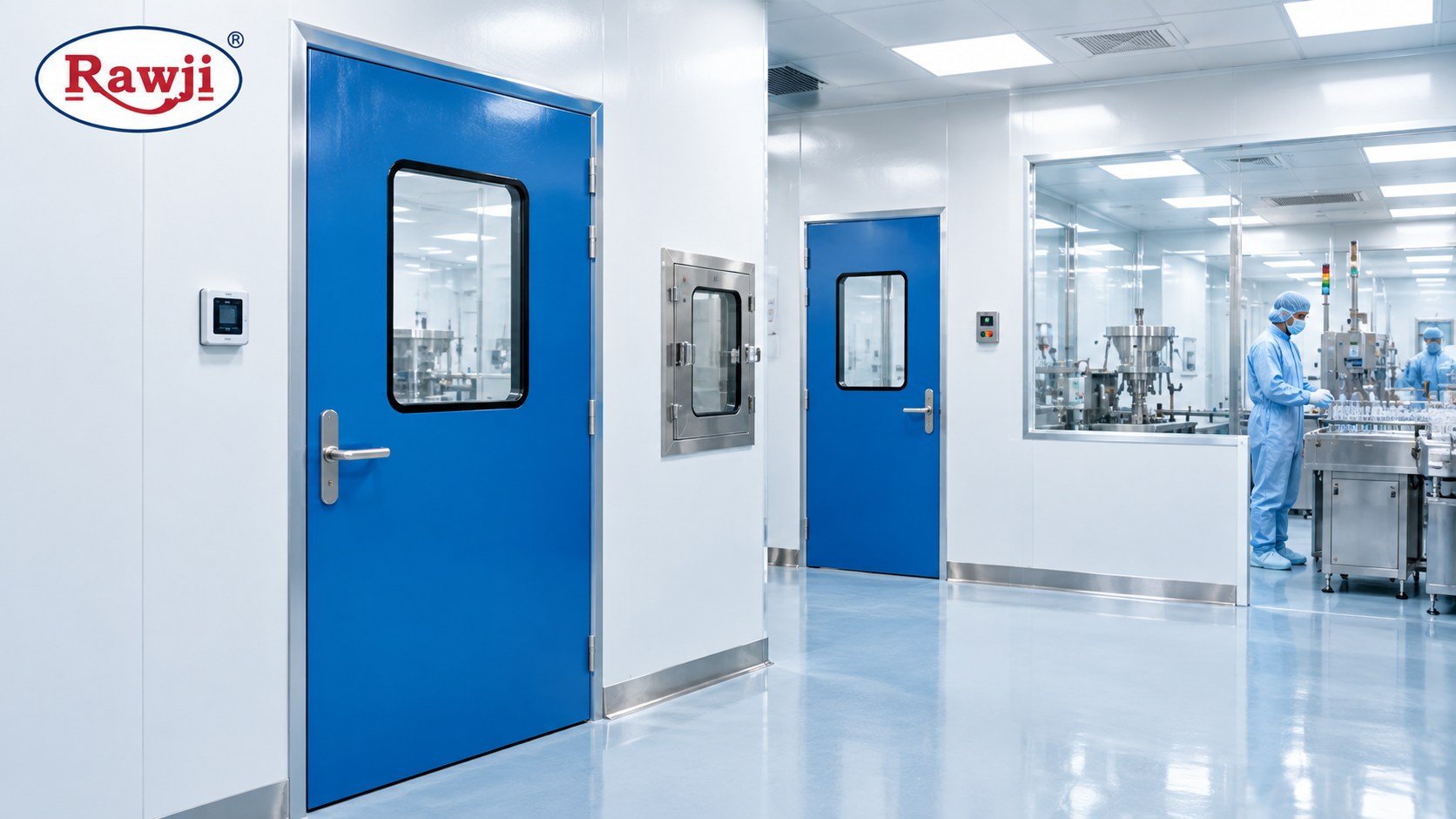
FRP has a non-porous, seamless surface that does not harbour bacteria or fungus and is easy to wipe down, which suits hospitals, pharma cleanrooms, food plants and laboratories. Steel doors can be cleaned too, but damaged paint and rust spots are hard to keep hygienic.
4. Thermal behaviour
Steel conducts heat and cold. FRP doors have low thermal conductivity, and their low thermal expansion helps doors and frames stay true in cold storage and in heat, without warping.
5. Fire: read the rating carefully
This is where buyers most often get confused. Fire-retardant FRP doors are made with fire-retardant resin and cores, and are engineered to surface spread of flame standards: BS 476 Part 7 Class 1 and ASTM E84. They are also corrosion-proof, which matters in chemical plants and battery rooms where steel doors rust. A surface spread of flame rating is not the same as a fire-resistance rating in minutes, though. If your fire officer or consultant needs a door set certified for a specific duration (such as 60 or 120 minutes), ask any supplier, FRP or steel, for the test certificate for that exact door set. Where that certified duration is mandatory, a certified steel fire door may be required.
6. Security
For high-security entrances, strongrooms and perimeter doors, steel's strength and the locking hardware it can carry make it the usual choice. FRP doors are suitable for internal, process and general-access doors, and can be reinforced for heavier hardware.
7. Maintenance over the door's life
Steel doors in damp or corrosive areas need repainting, rust treatment and eventually replacement of rusted frames. FRP doors are self-coloured and need no painting. Cleaning is usually all they need. Over the life of the building, this is often where FRP saves the most.
Quick decision guide
- Bathrooms, toilets and washrooms: FRP door and FRP frame.
- Hospital wards and corridors: heavy-duty FRP with kick plates.
- Pharma cleanrooms and labs: flush FRP cleanroom doors.
- Chemical plants, ETPs and battery rooms: FRP, with fire-retardant resin where needed.
- Cold storage: FRP for thermal stability and no rust.
- Main security entrances, or doors that must hold a certified fire-resistance duration: steel door sets with the required certification.
See FRP door sizes and thickness, FRP vs wood vs PVC doors, or the full FRP doors range.