Every factory gate, housing society and construction site needs a guard cabin, and most buyers choose between two types: a fibreglass (FRP) security cabin or a mild steel (MS) cabin. Both protect the guard from sun and rain. They behave very differently after a few monsoons, though. This guide compares them for gate and checkpoint use. (For larger site offices, see our comparison of metal porta cabins vs FRP cabins.)
The short answer
- Choose FRP for guard cabins at gates, toll booths and checkpoints, especially in coastal, high-rainfall, dusty or chemical-fume areas, and wherever the cabin may need to be moved.
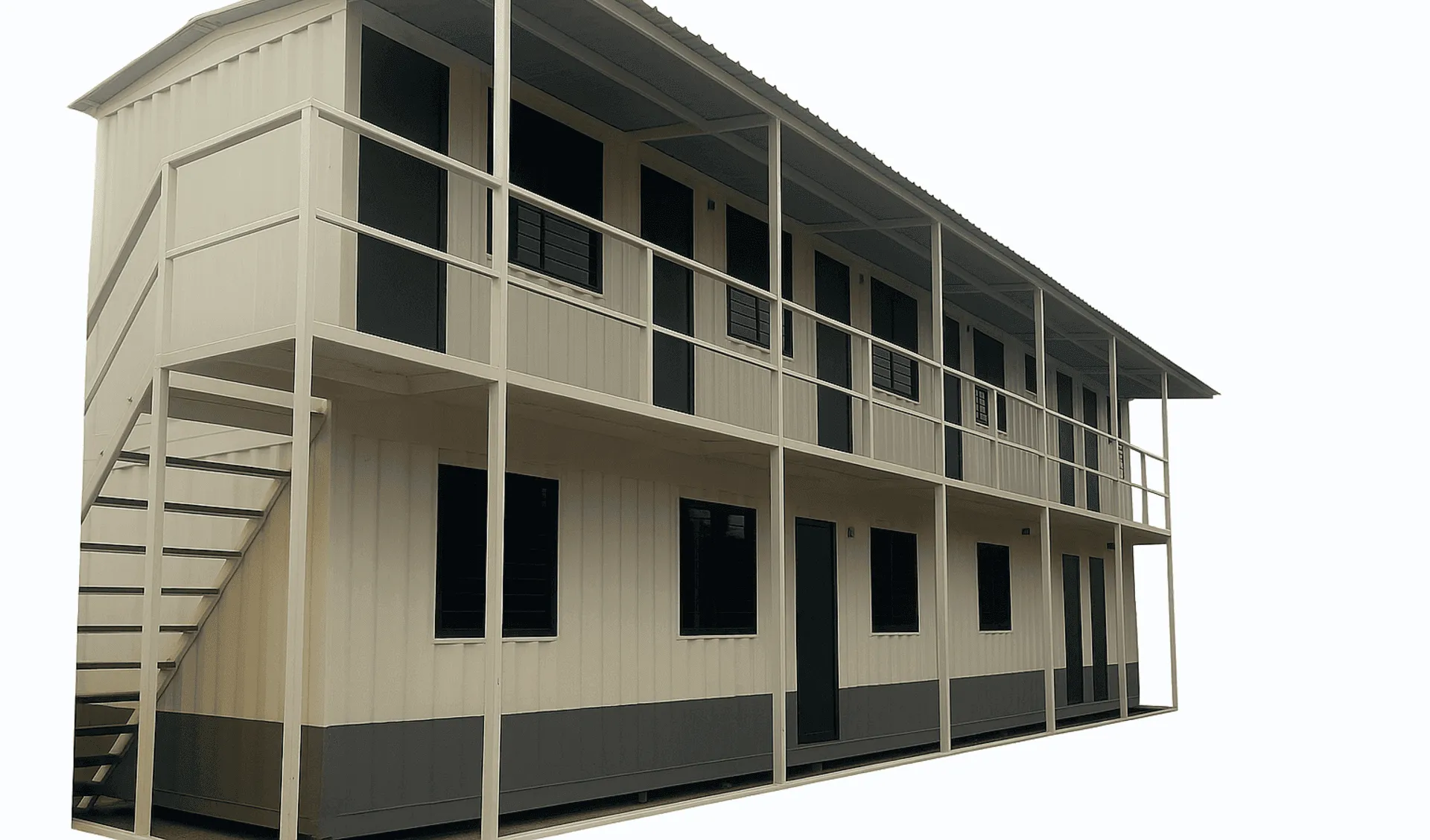
- Choose an MS or metal porta cabin when the security post is really a larger office, with a visitor lounge, multiple rooms or space for more than a few people.
1. Rust and weather
An MS cabin relies on its paint. At a gate it faces sun, rain, dust and vehicle splash every day, and once the paint chips, rust starts at the base, the corners and around the windows. FRP does not rust or rot. Rawji's FRP guard cabins are built from moulded fibreglass sandwich panels and insulated weatherproof huts use EPDM gaskets on doors and windows to keep monsoon rain out. Cleaning is usually a wash with a water hose, with no scraping or repainting.
2. Heat inside the cabin
A single-skin steel cabin heats up quickly in direct sun, which makes long shifts hard on guards. FRP sandwich panels conduct far less heat, and insulated models add a PUF or EPS core in the walls and roof. That keeps the cabin noticeably cooler and makes a fan or AC much more effective. For hot regions, ask for the insulated version.
3. Moving the cabin
Gates change: a new entrance opens, a site moves on, a society rearranges parking. An FRP guard cabin is light. A typical unit can be lifted by 4–6 workers, or moved by forklift on its raised tubular base legs. An MS cabin of the same size is heavier and usually needs a crane.
4. Sizes and what fits inside
Common FRP security cabin sizes and what each suits:
- 4 × 4 ft: a single-guard checkpoint where space is tight.
- 6 × 4 ft: 1–2 guards with a desk and a surveillance screen.
- 6 × 6 ft: 2 guards at a main gate entrance.
- 8 × 6 ft: a gatehouse with an attached private washroom.
- 10 × 8 ft: a visitor registration office.
Factory gate cabins are also made in 12 × 8 ft, with 360° tinted glass for weighbridge monitoring and conduits for CCTV, boom barriers and intercoms. Anything larger is usually better as a metal porta cabin.
5. What comes fitted
A standard Rawji FRP guard cabin includes complete wiring, an LED light, an exhaust fan, a socket and switchboard, sliding aluminium windows on two or three sides, a lockable moulded FRP door and a writing desk. Options include a split AC, tinted glass, custom colours and an internal FRP toilet cubicle.
6. Cost
Indicative ex-factory prices for FRP security cabins run from about ₹28,000–38,000 for a 4 × 4 ft cabin to about ₹1,10,000–1,45,000 for a 10 × 8 ft cabin. The final price depends on size, insulation, windows, fit-out and whether a toilet is included. See the full security cabin price list. When comparing with MS, include the cost of repainting and rust repairs over the cabin's life.
Quick decision guide
- Housing society or IT park gate: 6 × 4 or 6 × 6 ft FRP cabin.
- Factory gate with a weighbridge or boom barrier: FRP factory gate cabin, 8 × 6 ft or larger.
- Coastal site, beach resort or chemical plant: FRP, insulated.
- Toll plaza or parking entry: FRP toll and parking booth.
- Security office with rooms for several staff: metal porta cabin.
See also our security cabin planning guide and the full security cabins range.