Thousands of Indian textile mills, godowns and older factory sheds are still roofed with asbestos-cement (AC) sheets. As those roofs age, owners face cracked sheets, leaks and dark interiors, and many decide to replace them. FRP sheets moulded to the AC corrugation profile are one of the simplest replacements, because they fit the same purlins and the same fixing positions. This guide covers how to plan the change safely and correctly.
Safety first: asbestos needs careful handling
Asbestos fibres are a recognised health hazard when AC sheets are broken, cut, drilled, sanded or cleaned with power tools or pressure washers. Before any removal work:
- Use an experienced roofing contractor who has removed AC sheets before. This is not a DIY job.
- Do not break, cut or drill the old sheets. Unfix them whole and lower them carefully.
- Keep the sheets damp while handling to reduce dust, and keep workers and the public away from the work area.
- Never walk directly on AC sheets. They are brittle and a common cause of falls through roofs. Use crawling boards supported on the purlins, plus fall protection.
- Ask your contractor how the old sheets will be disposed of, and follow the rules that apply in your state.
Step 1: match the AC profile
Older AC roofs mostly use a corrugation with a 177 mm pitch. Rawji Exports moulds FRP sheets to this profile, so a new FRP sheet replaces an AC sheet one-for-one and laps correctly with any AC sheets you keep. To confirm the match, measure the pitch (crest centre to crest centre), the depth (valley to crest) and photograph the end of an existing sheet. See our profile matching guide for the method.
Step 2: check the purlins
AC sheets are heavy, so their purlins are often closely spaced. That suits FRP, but the purlins themselves may have rusted or rotted over the years. Inspect every purlin while the roof is open and replace any damaged ones. Then check the spacing against the FRP thickness you plan to use:
- 1.5–2 mm corrugated FRP: purlins at 750–900 mm centres.
- 2–3 mm corrugated FRP: purlins up to 1,150 mm centres.
If the roof must carry occasional maintenance foot traffic, step up one thickness class.
Step 3: decide where you want daylight
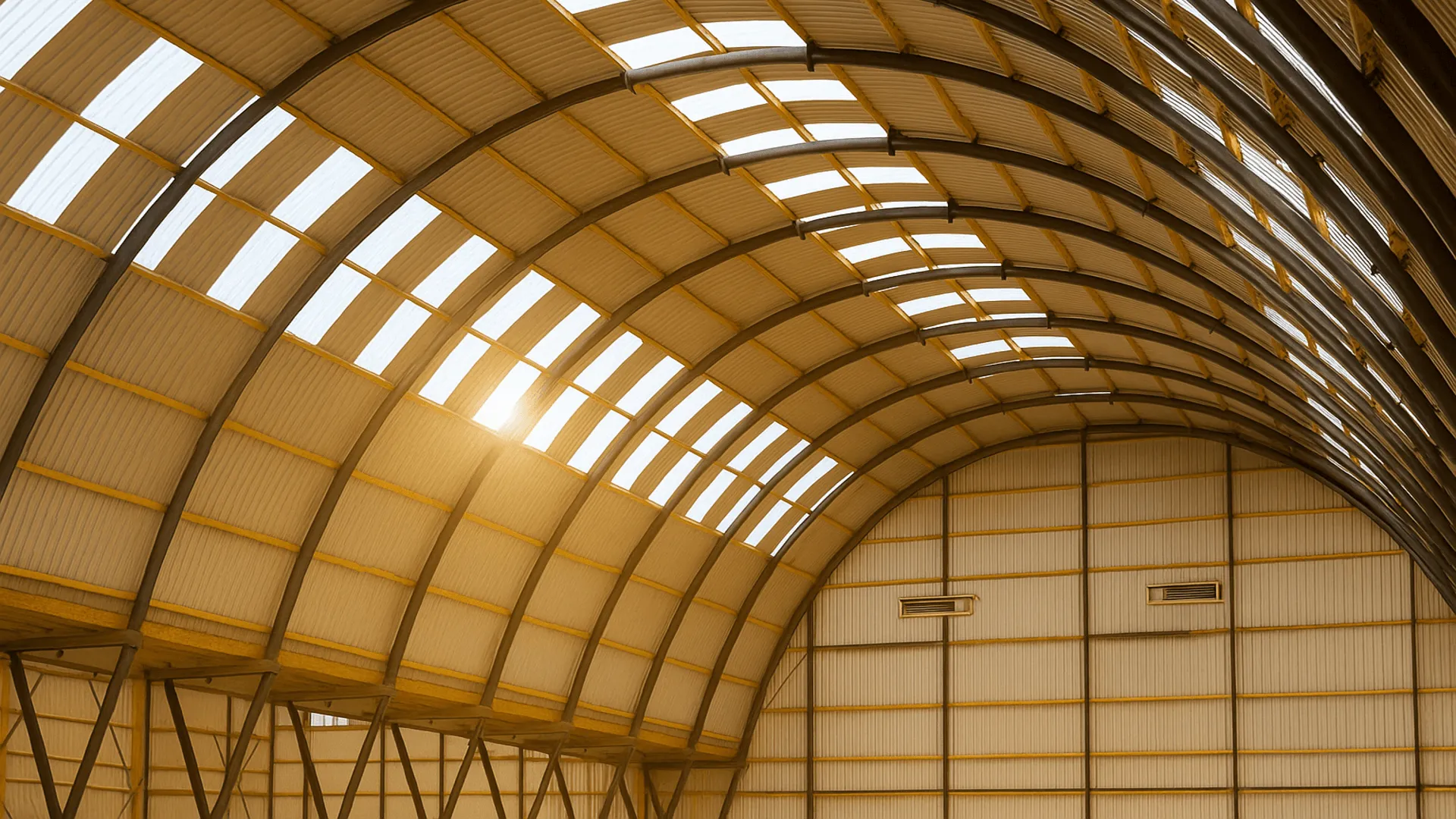
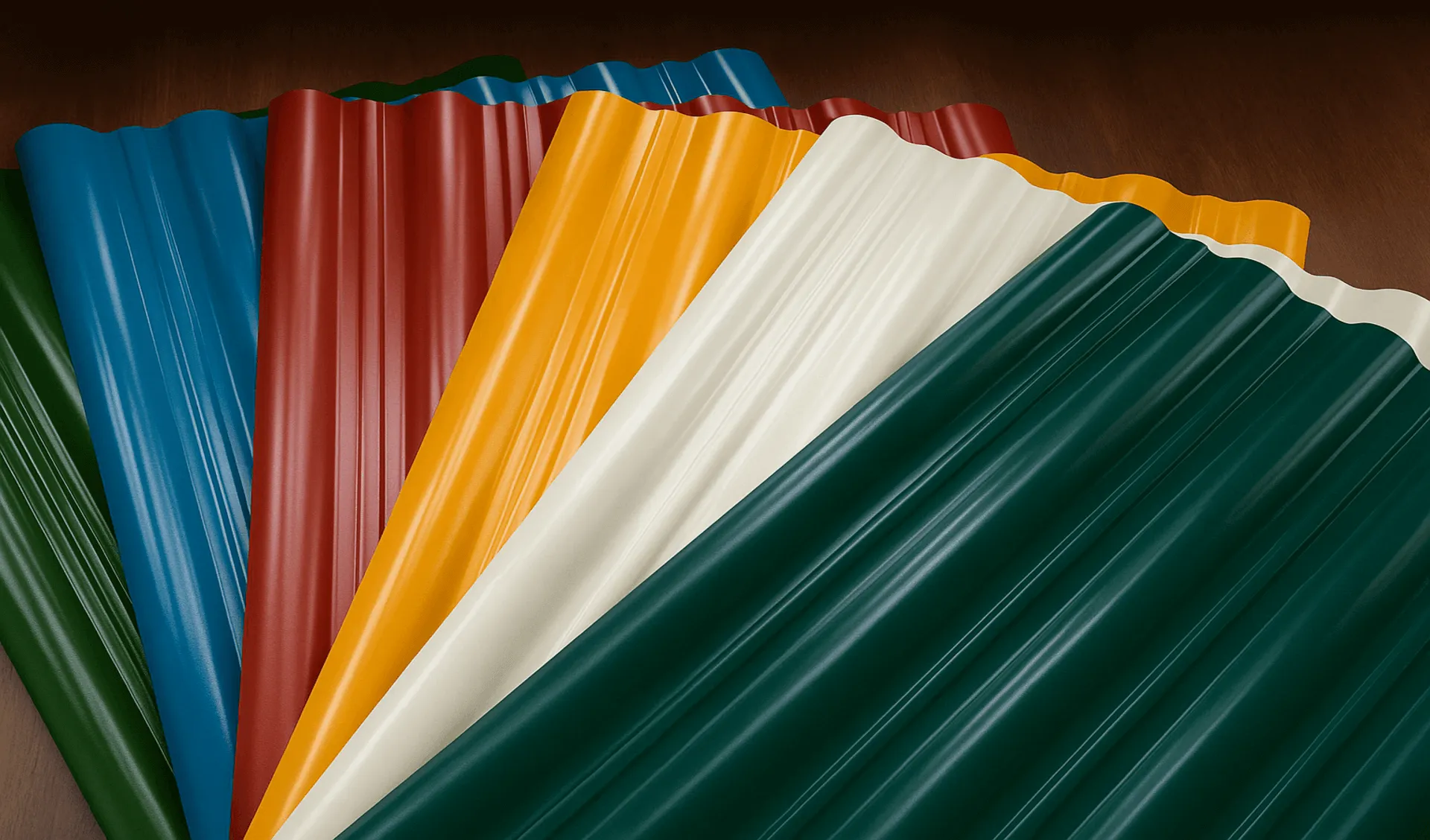
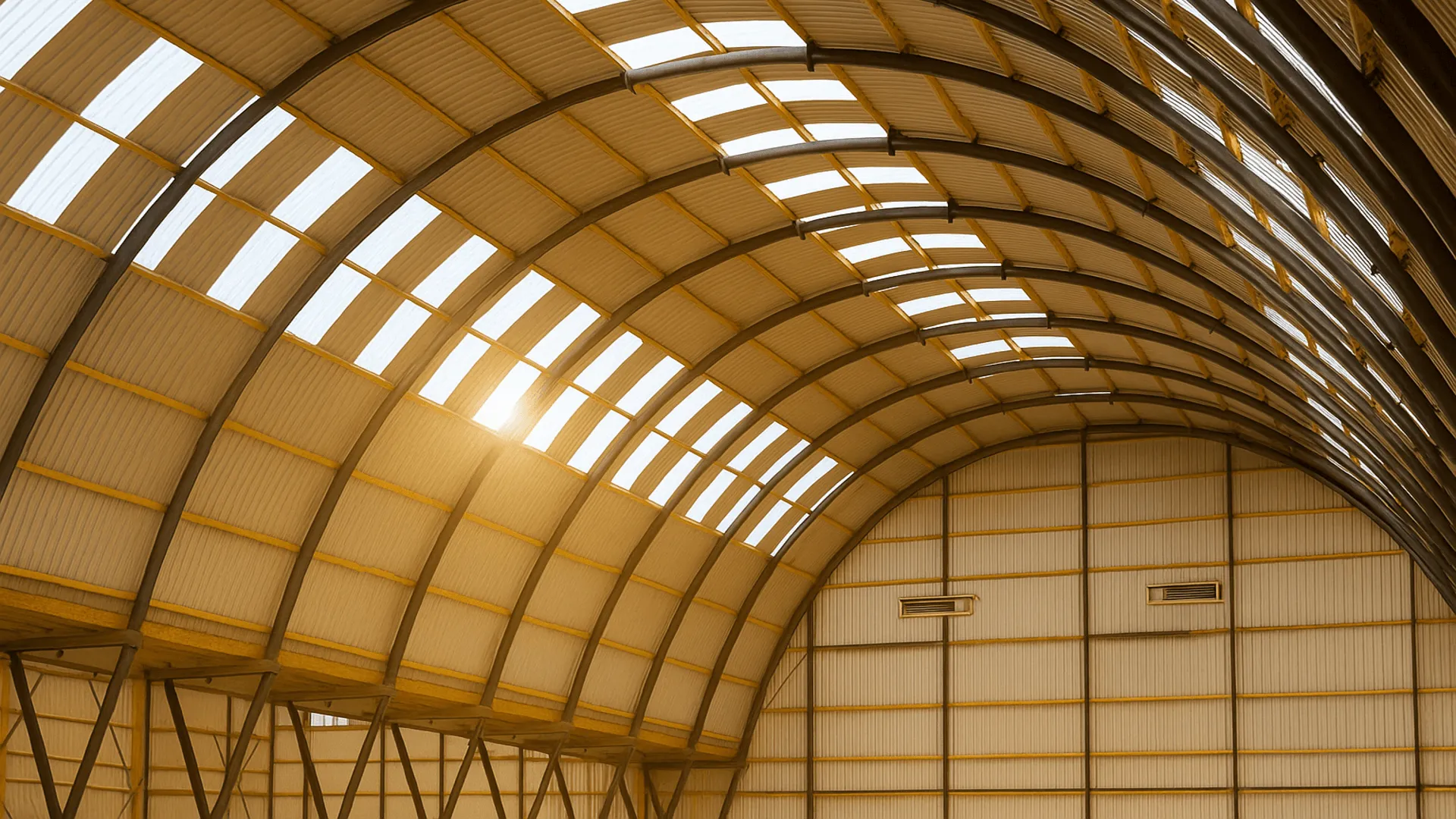
Replacing an AC roof is the cheapest moment to add daylight. Use translucent FRP skylight sheets in the same 177 mm profile for some bays, and opaque or coloured FRP sheets for the rest. As a starting point, one strip of translucent sheets every 10–12 m of roof width typically removes the need for daytime electric lighting in a warehouse.
Step 4: choose the resin for the building
- Inland godowns and mills: general-purpose resin with a UV-stabilised top surface.
- Plants with acid fumes, or sites near the coast: chemical-resistant FRP roofing sheets.
Always specify a UV-stabilised film or gelcoat on the weather side. It is the difference between a 5-year and a 15-year surface.
Step 5: fix the new sheets correctly
- Pre-drill fastener holes 2 mm oversize and use roofing screws with EPDM washers.
- End laps of 150–200 mm, with the upper sheet over the lower in the direction water flows. Side laps of one full corrugation.
- Seal end laps with neutral-cure silicone or polyurethane. Acid-cure silicone attacks the resin.
- Cut sheets on the ground with a fine-tooth saw, never in position on the roof.
Full fixing patterns are in our FRP roofing installation guide.
Replace in phases if you need to
Because FRP sheets match the AC profile, you do not have to replace the whole roof at once. Many owners start with the bays that leak or crack worst, or the bays over working areas, and replace the rest over later shutdowns. Each new sheet laps cleanly with the remaining AC sheets.
What to send for a quote
- Photos of the existing roof and the end of an AC sheet
- Pitch and depth measurements, sheet lengths and the number of bays
- Purlin spacing
- How many translucent sheets you want, and whether the building has chemical fumes or is near the coast
Compare thickness bands and indicative rates on our FRP roofing sheet price list, or see the full FRP roofing sheets range.