Ordering FRP roofing sheets comes down to four numbers: profile, cover width, length and thickness. Get them right and the sheets sit flush on the purlins, lap cleanly and carry the load. Get one wrong and you pay for leaks, cracked sheets or extra purlins. This chart brings together the standard sizes Rawji Exports moulds at its Bhiwandi plant, and how to choose between them.
Thickness: which one for which roof
- 1.0–1.2 mm: skylights, greenhouse panels and low-load canopies.
- 1.5–1.8 mm: residential sheds, car parking roofs and verandas.
- 2.0–2.5 mm: commercial sheds and workshop roofing.
- 3.0 mm and above: industrial warehouses, factory sheds and high wind-load zones.
Thickness alone does not decide strength. Glass fibre content and the depth of the profile matter just as much, and two sheets of the same thickness can perform very differently. Always ask for the glass content by weight, not only the thickness. If the roof will carry occasional maintenance foot traffic, step up one thickness class.
Purlin spacing by thickness
As practical guidance for non-walkable roofs under normal loads:
- 1.5–2 mm corrugated sheets: purlins at 750–900 mm centres.
- 2–3 mm corrugated sheets: purlins up to 1,150 mm centres.
- 2–3 mm trapezoidal sheets: their deeper ribs reach 1,300–1,500 mm centres.
For higher wind zones or regular roof access, reduce the spacing or use a thicker sheet. Send us your purlin layout and we will confirm the right combination.
Standard widths, lengths and profiles
- Corrugated FRP sheets: cover widths of 910, 1,000, 1,060 and 1,100 mm, plus custom widths. They are made in continuous lengths up to 12 m (40 ft), so most roof slopes need no end lap at all. Profiles include standard corrugation, GI-matching and the AC profile (177 mm pitch).
- Trapezoidal FRP sheets: effective cover widths of 1,000, 1,020, 1,050 and 1,072 mm, crest heights of 28, 30, 35 and 40 mm, and rib pitch of 200 or 250 mm, to match PEB and box-profile metal roofs.
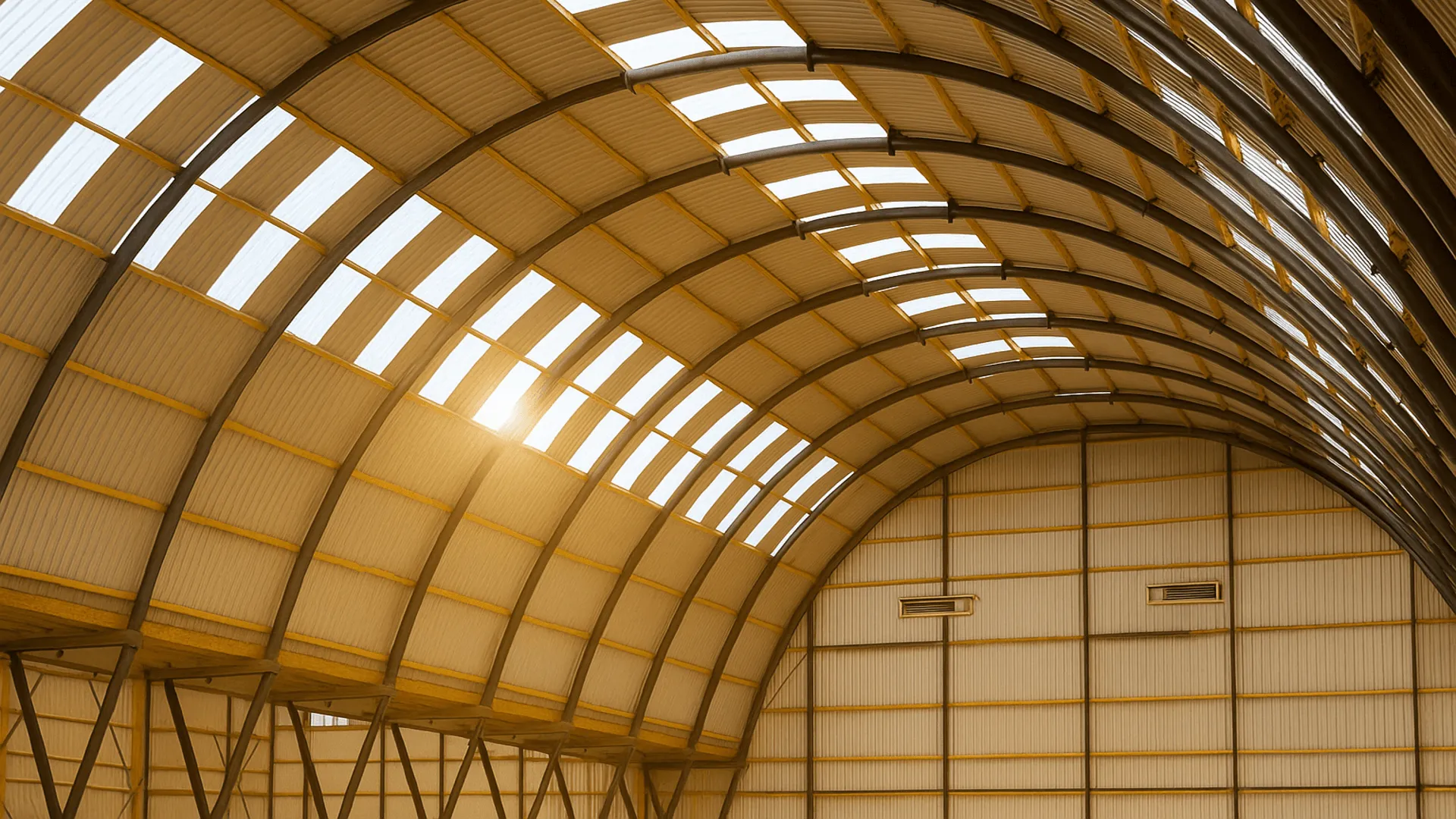
- Translucent skylight sheets: moulded in the same profiles as the roof around them, with 60–85% light transmission depending on grade.
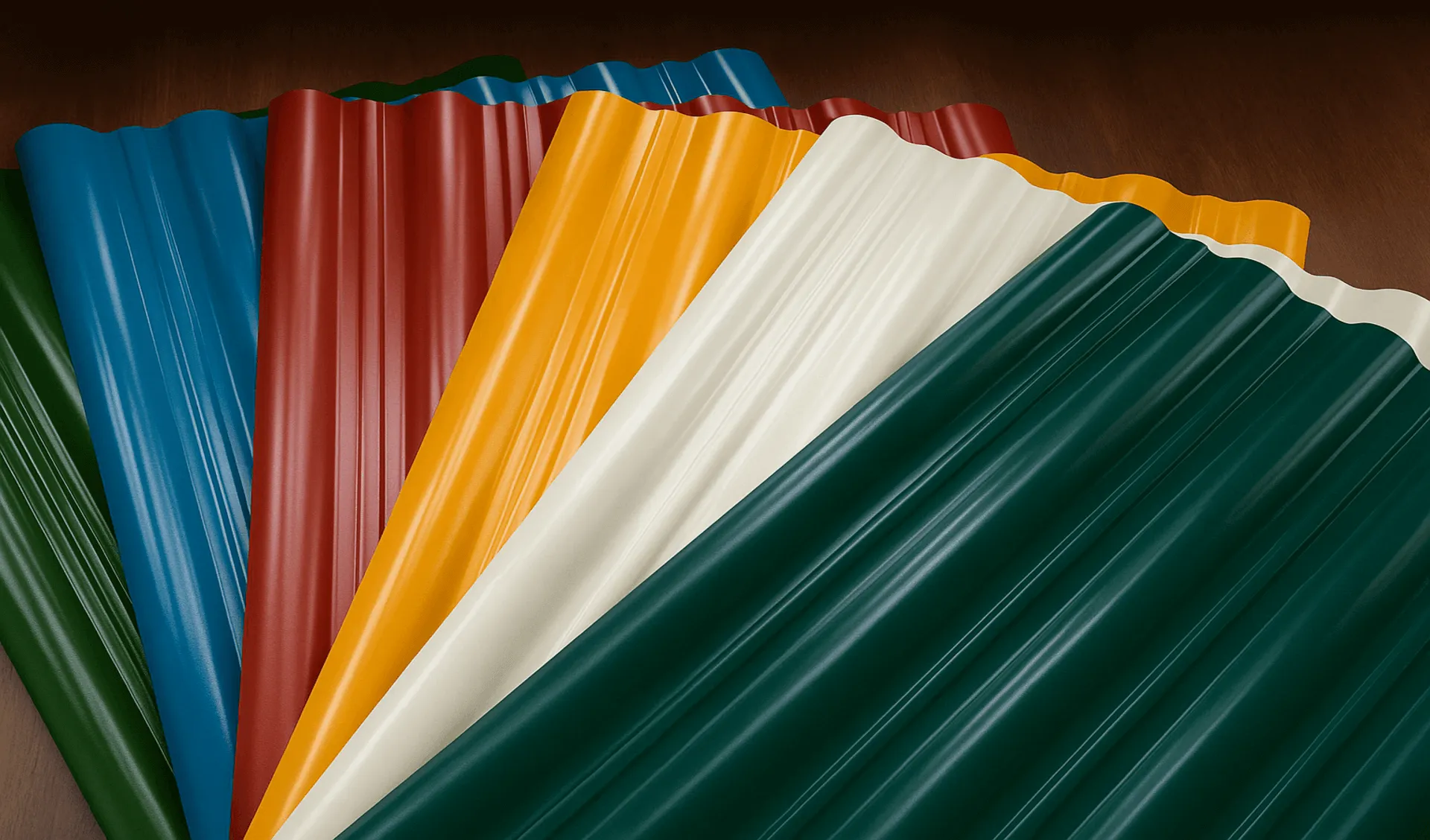
- Coloured and opaque sheets: the same profiles in solid colours, for shade and architectural roofs.
Thickness options by profile
- Corrugated: 1.2 to 4.0 mm
- Trapezoidal: 1.5 to 3.5 mm
- Translucent skylight: 1.5 to 3.0 mm
- Coloured and opaque: 1.5 to 4.0 mm
How to work out how many sheets you need
Always calculate with the cover width, not the overall sheet width. Corrugated sheets overlap one full corrugation at the side, and trapezoidal sheets nest one rib, so each sheet covers less than its full width. Along the slope, allow 150–200 mm for every end lap if a single sheet cannot cover the full rafter length. On roofs pitched below 10°, increase the end laps.
How to measure an existing roof
If the FRP sheets must fit an existing metal or AC roof, measure three things:
- Pitch: crest centre to crest centre, measured across several crests and averaged.
- Depth: from the valley floor to the top of the crest.
- A photo of the end of an existing sheet, so the profile can be matched exactly.
For most Indian roofs the matching mould already exists, so there is no tooling cost. Our profile matching and purlin spacing guide explains the common profiles in detail.
What to send for an accurate quote
- Profile (or a photo and the pitch and depth measurements)
- Cover width and the length of each sheet
- Thickness, or the purlin spacing so we can recommend one
- Translucent, opaque or coloured finish
- Resin grade: general purpose for inland sheds, or chemical-resistant resin for acid fumes or coastal air
- UV-stabilised film or gelcoat on the weather side (recommended for every outdoor roof)
- Quantity and delivery location
Indicative rates for each thickness band are on the FRP roofing sheet price list. For the full range, see FRP roofing sheets.