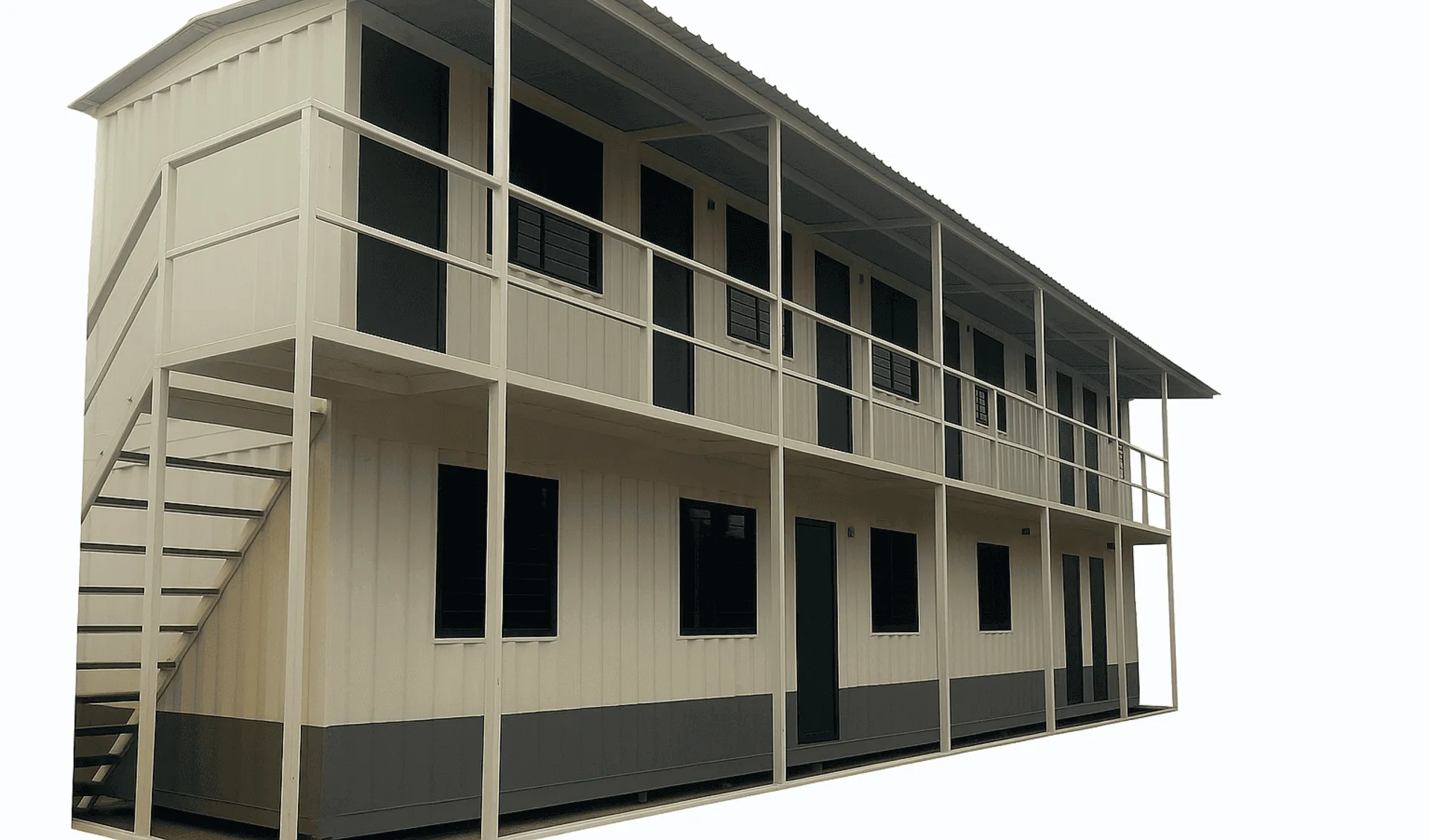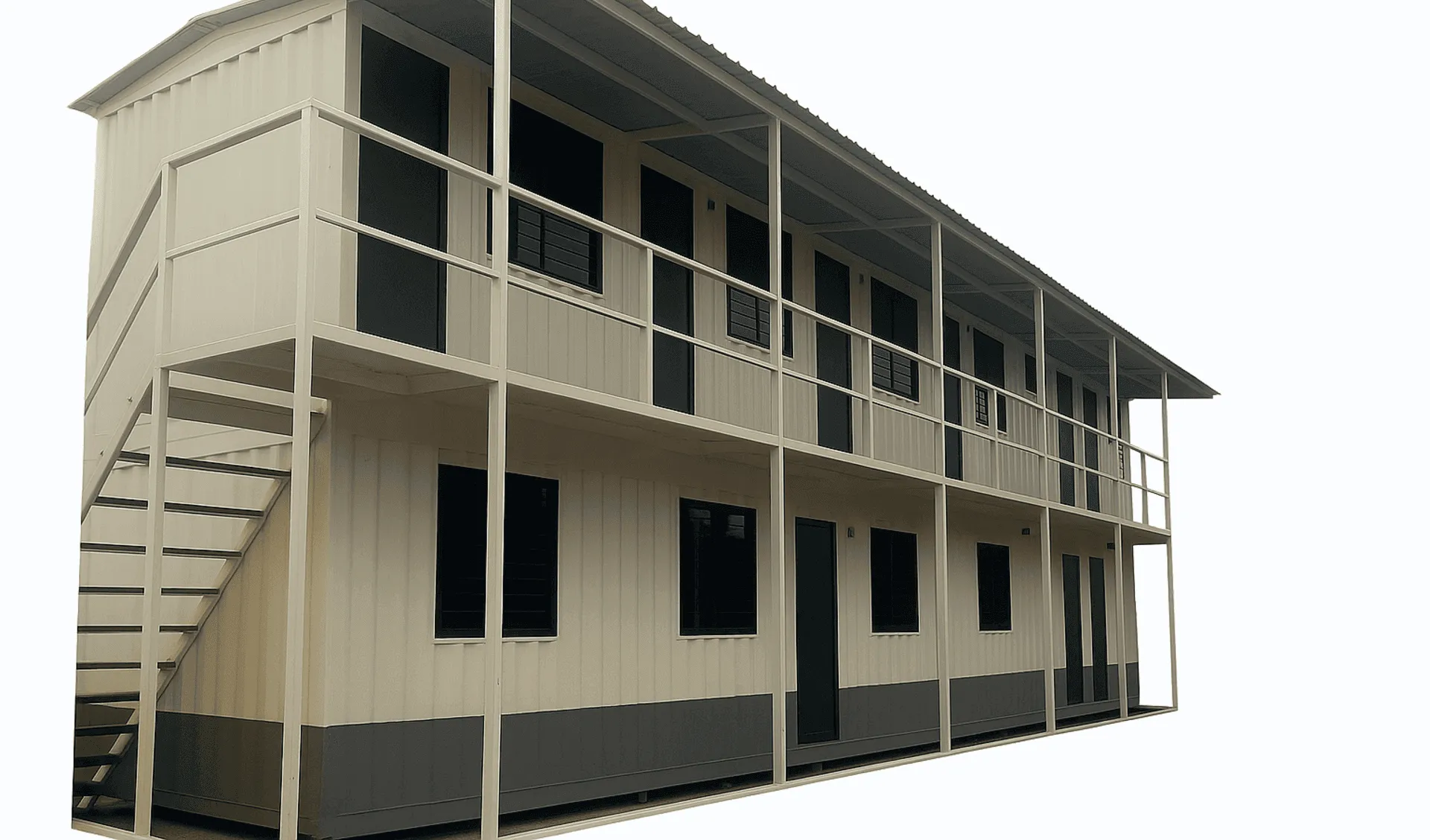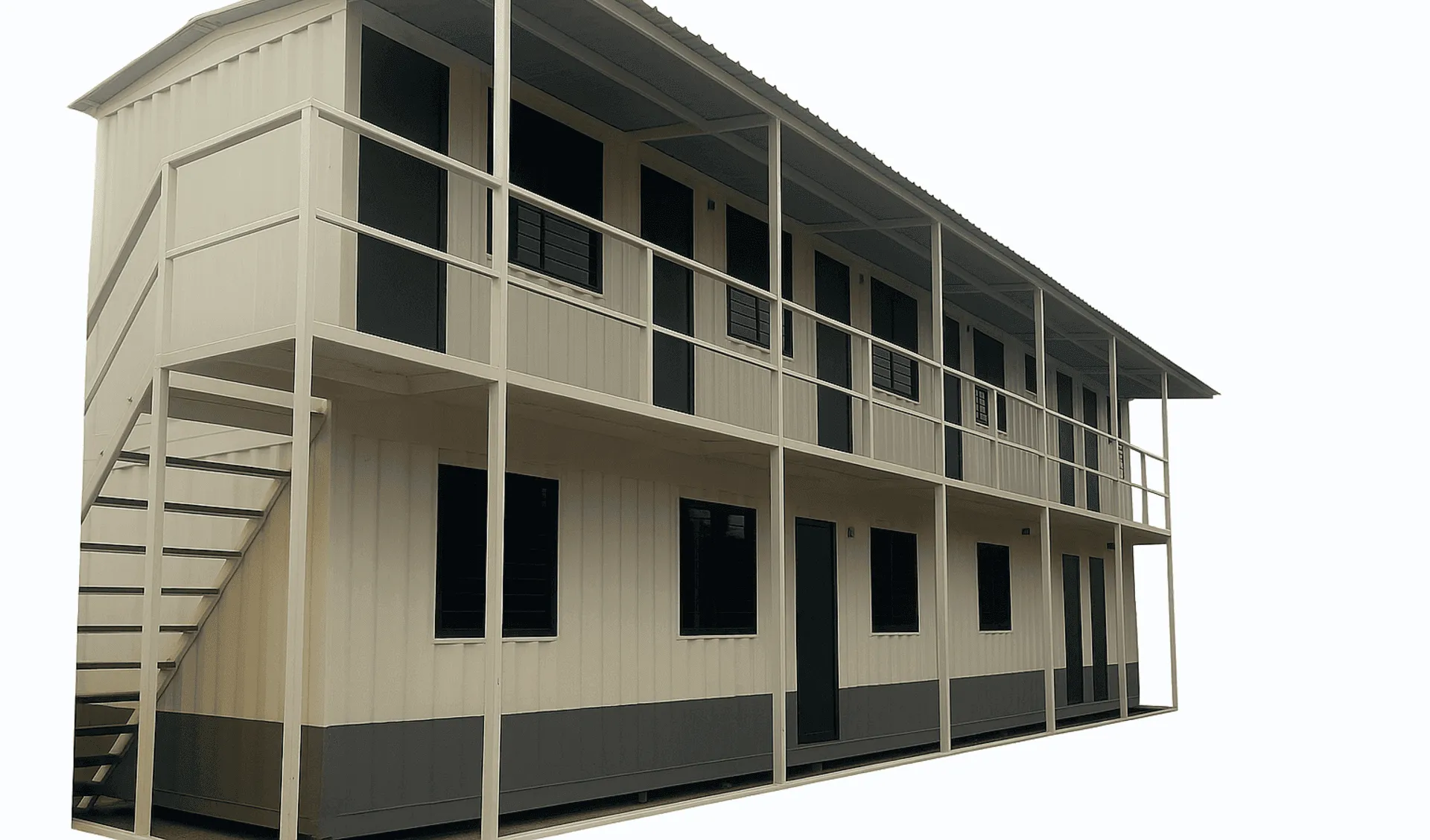
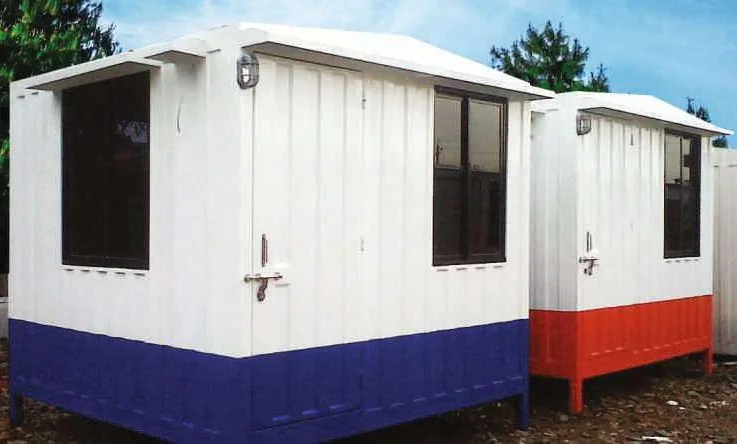
A bare steel cabin standing in the Indian sun heats up fast, and in winter it loses heat just as quickly. Insulation is what turns a metal box into a usable office, bunkhouse or control room. Rawji Exports offers metal porta cabins with glass wool insulation as standard and PUF (polyurethane foam) sandwich panels as an upgrade. This guide explains the difference and which one suits your site.
Why insulation matters in a metal cabin
Steel conducts heat. Without insulation, the outer sheet's heat passes straight into the room, so the cabin is uncomfortable to work or sleep in and any air conditioner struggles to keep up. Insulation slows that heat flow, keeps the interior steadier through the day, and lets a smaller AC do the job.
Option 1: glass wool (standard)
Rawji's standard metal site office uses 50 mm glass wool in both the side walls and the ceiling, behind a 1.2 mm corrugated outer steel sheet and 8 mm pre-laminated MDF inner panelling.
- Suits: site offices, stores and security cabins in moderate climates, especially cabins that are naturally ventilated or only lightly air-conditioned.
- Advantages: the lower-cost option, and easy to combine with any interior panel finish.
- Watch out for: the inner and outer skins must stay sealed. Glass wool performs well only while it stays dry and in place.
Option 2: PUF sandwich panels (upgrade)
In a PUF panel insulated cabin, the walls and roof are factory-made sandwich panels: a rigid polyurethane foam core, injected at 40 kg/m³ density, bonded between pre-coated galvanised steel (PPGI) sheets on both faces.
- Panel thicknesses: 50, 60, 80 and 100 mm for walls and roof.
- Joints: interlocking tongue-and-groove joints with cam locks, so air does not leak between panels.
- Moisture: PUF has a closed-cell structure, so it does not soak up water.
- Suits: air-conditioned offices, control rooms, labs, and living accommodation in very hot or cold locations.
Side-by-side: which should you choose?
- Moderate climate, naturally ventilated site office: standard 50 mm glass wool.
- Air-conditioned office or meeting room used all day: PUF panels, typically 50–60 mm.
- Bunkhouses for workers in desert or very hot regions, or cold hill sites: PUF panels of 50–80 mm, as used in our mining site bunkhouses.
- SCADA control rooms, server rooms and labs with sensitive equipment: PUF panels, with HVAC provisions built in at the factory. See customised modular cabins.
- Security cabins at gates: consider an insulated FRP security hut, which is lighter and rust-proof.
Don't forget the roof and the floor
Most of the sun's heat arrives through the roof, so insulate the ceiling or roof panel as well as the walls. A roof sloped to shed rainwater, kept clear of stacked materials, also keeps water away from the insulation. At floor level, raising the cabin on pedestals keeps it off damp ground.
Fire safety
Ask for a fire-retardant PUF formulation, and use FR-grade concealed wiring, as in Rawji's standard cabins. Keep heaters, cooking equipment and AC outdoor units clear of the panels, and fit the cabin with a fire extinguisher as part of your site safety plan.
What to tell us when you ask for a quote
- Site location and climate, including whether it is coastal, desert or hill
- What the cabin is for (office, bunkhouse, control room or store) and how many people will use it
- Whether it will be air-conditioned, and for how many hours a day
- Preferred size. Standard sizes run from 10 × 10 to 40 × 10 ft.
See all standard porta cabin sizes, our site office planning guide, or the full metal porta cabins range.