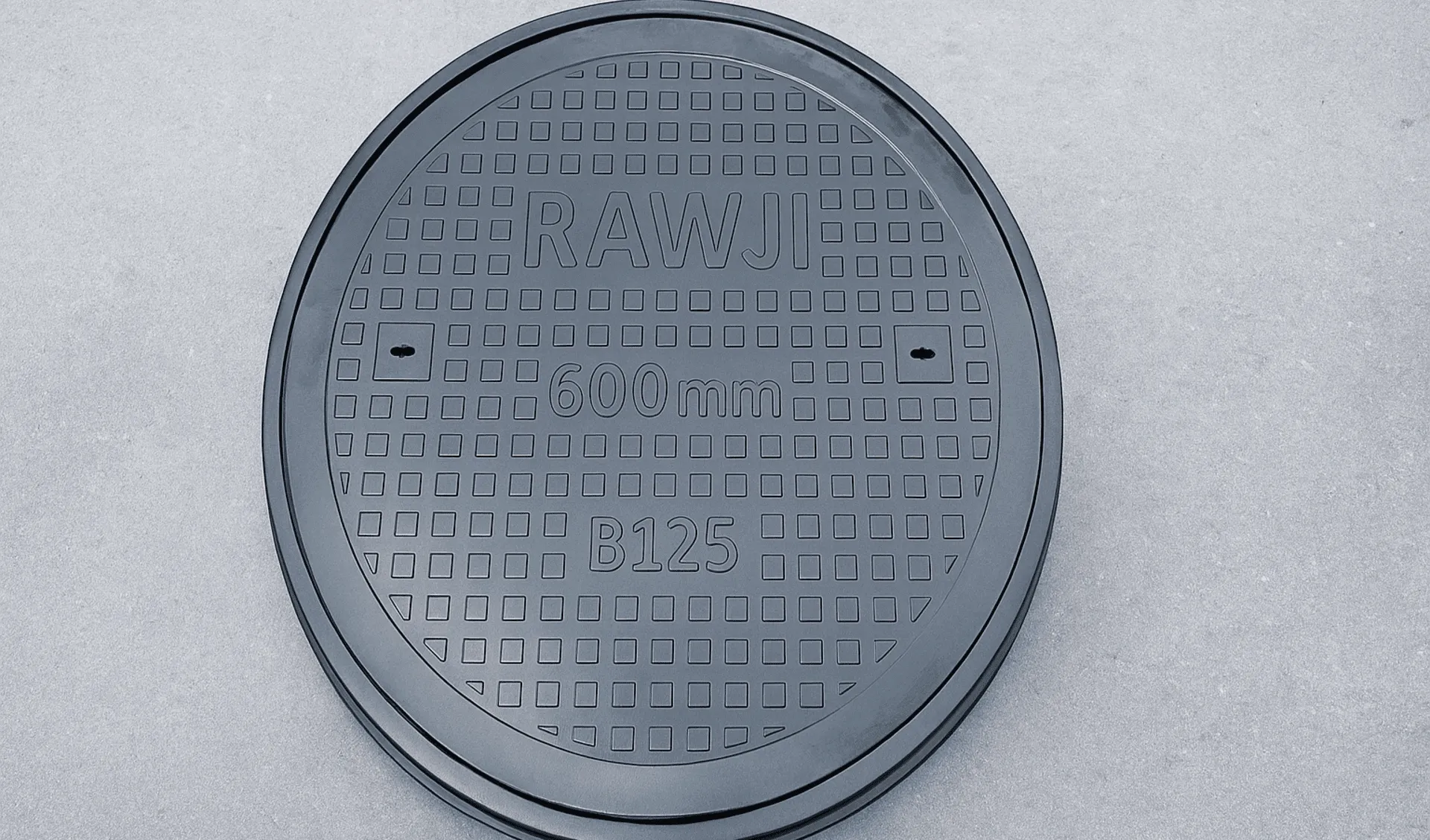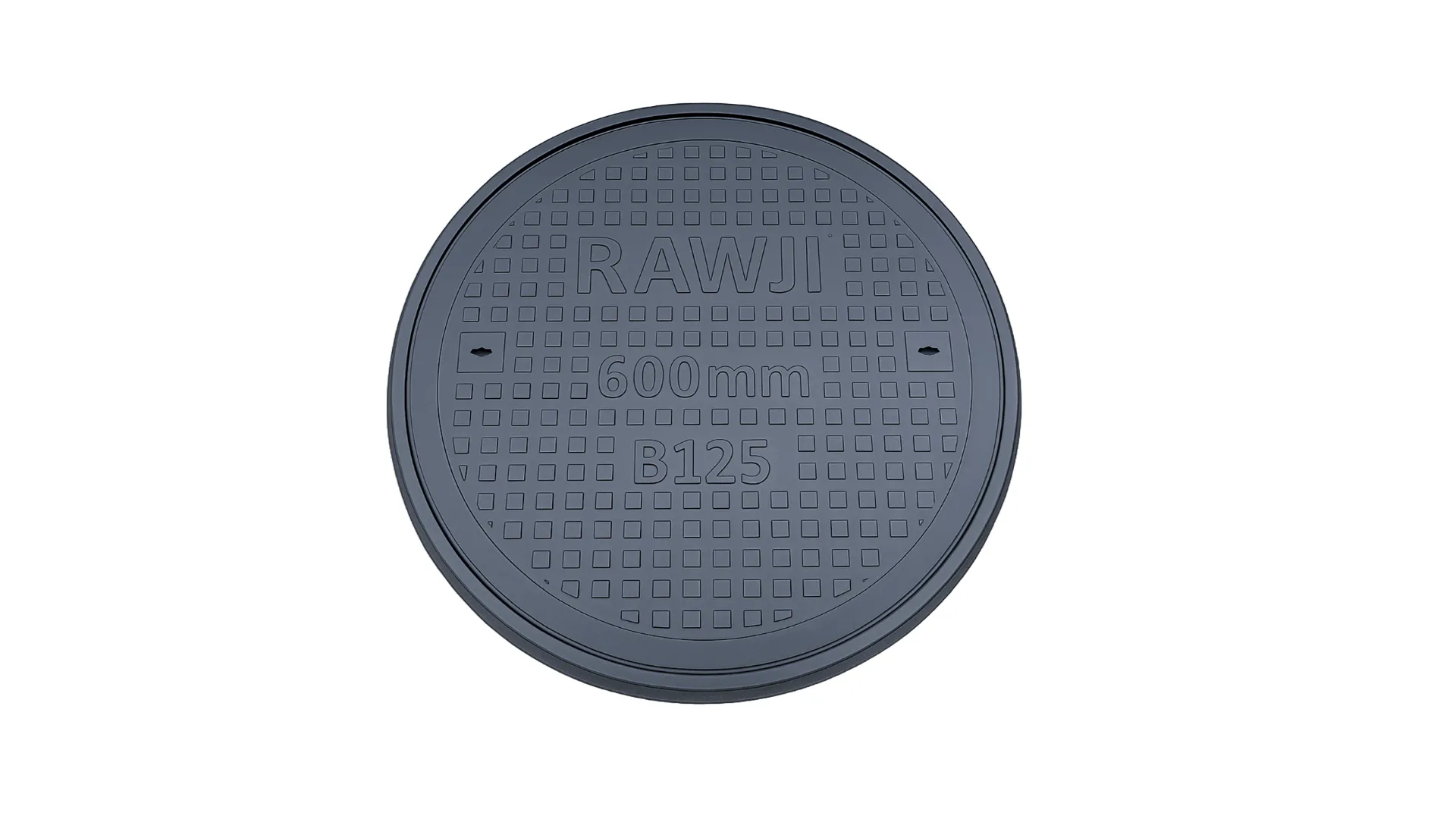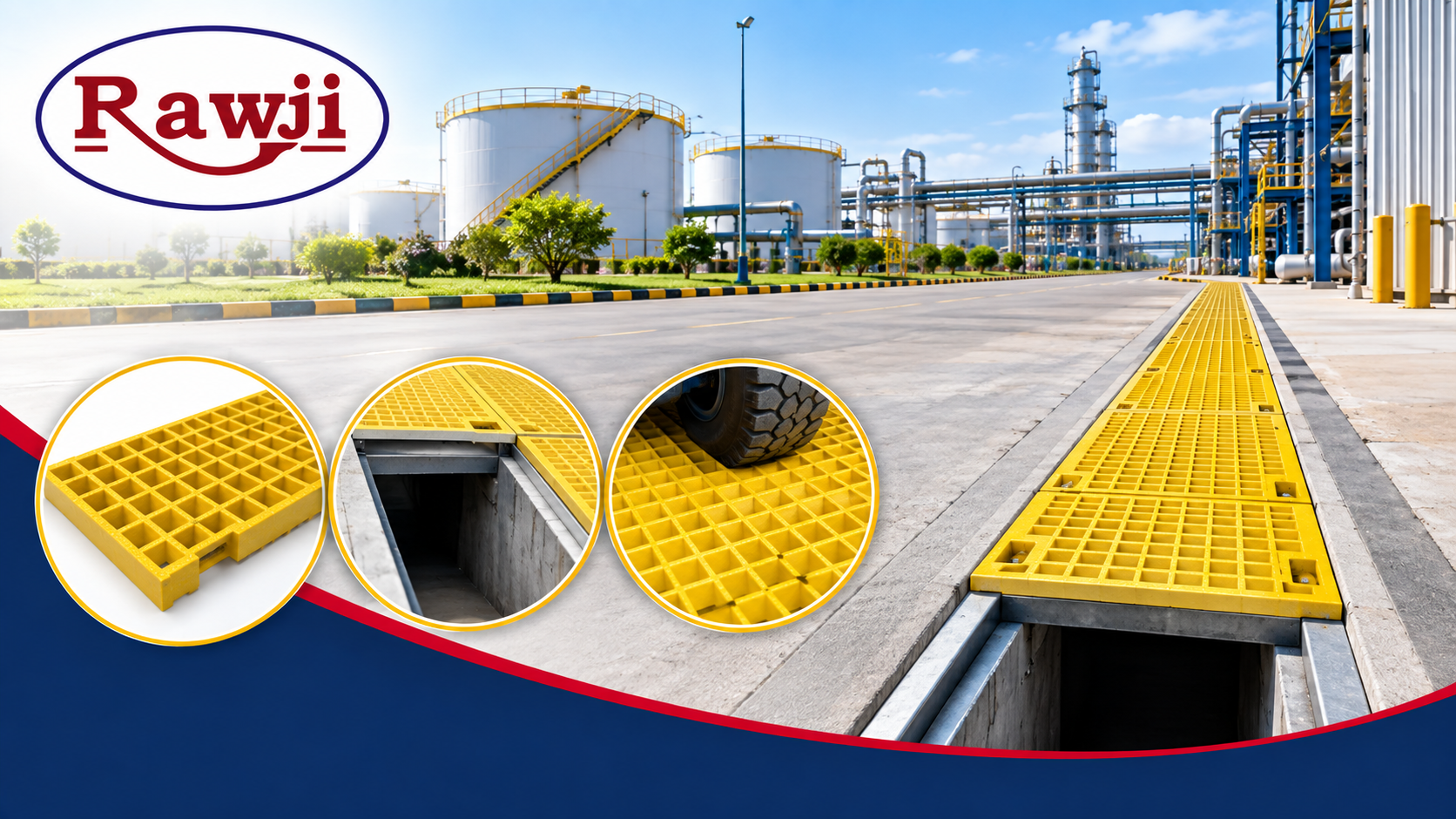
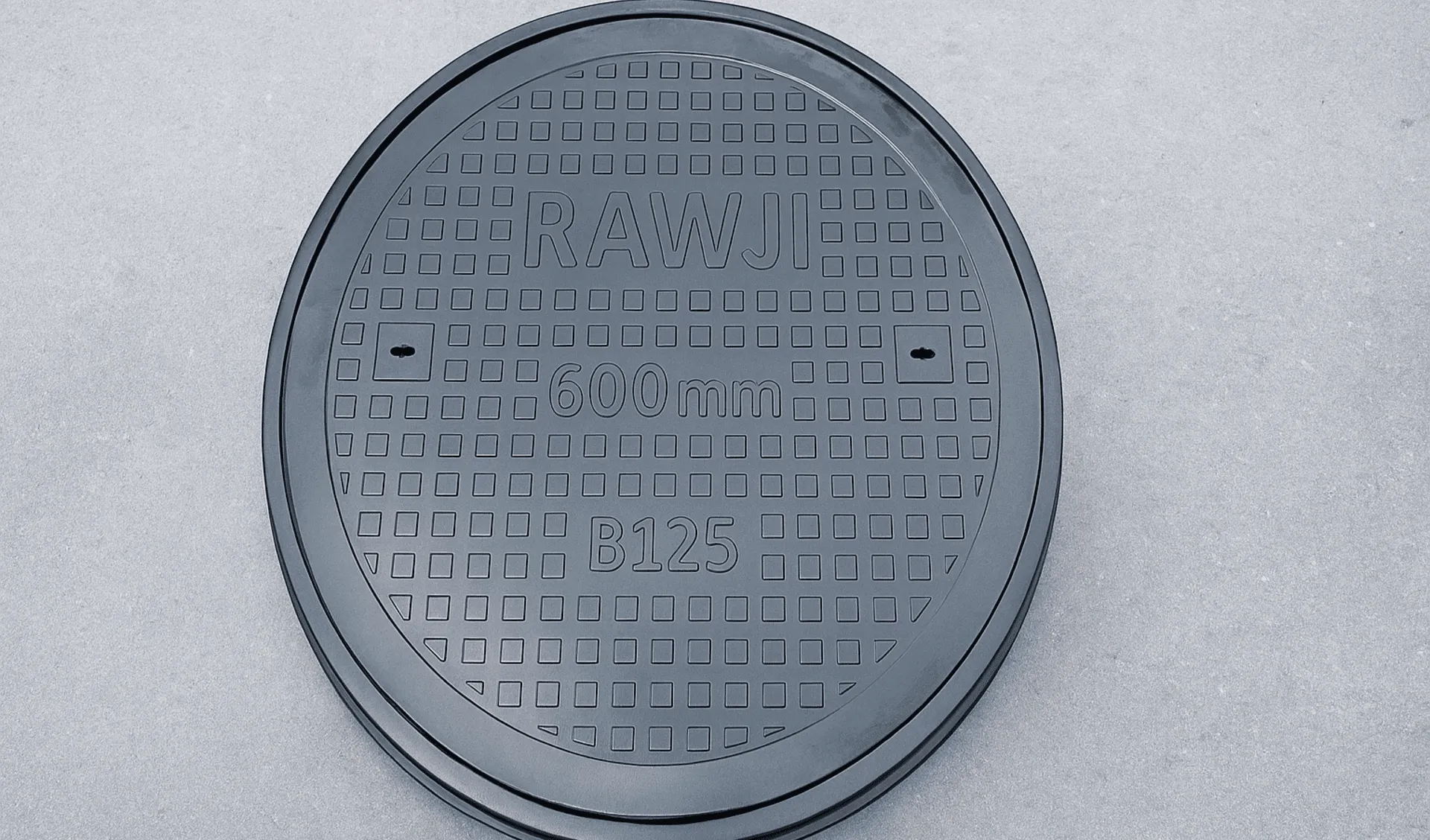
Across Indian towns and townships, many drainage and utility chambers are still closed with RCC (reinforced cement concrete) slabs or precast concrete covers. They are cheap and have no scrap value, so they are rarely stolen. They are also heavy, they crack and chip, and they are hard to open for routine maintenance. This guide compares RCC and concrete covers with FRP composite covers, so you can decide which suits each location.
The short answer
- FRP covers suit chambers that are opened regularly, sewers and other locations with sewage gas or chemical exposure, sites that need a tight seal against odour and water, and places where workers must lift covers safely.
- RCC covers can still make sense for chambers that are almost never opened, in low-traffic areas, where the lowest first cost is the main concern.
1. Weight and handling
Concrete is heavy. Even a modest RCC cover usually needs two or more workers, a crowbar or lifting equipment, which slows inspections and leads to back injuries and dropped covers. FRP covers are about 80% lighter than cast iron, and far lighter than concrete. A standard D400 FRP cover weighs roughly 22–28 kg, and smaller covers can be lifted by one worker with standard lifting keys.
2. Cracking, chipping and broken edges
Concrete covers often crack and chip, especially at the edges, when they are dropped, levered open or run over by vehicles heavier than they were made for. A cracked slab can collapse into the chamber. Once cracks reach the steel reinforcement, the steel rusts and expands, and the damage spreads. FRP covers are moulded in one piece and do not rust, and their impact resistance stops them cracking when they are handled.
3. Sewage gas and chemicals
Sewer chambers contain hydrogen sulphide (H₂S) and moisture, which attack concrete and steel over time. FRP covers are unaffected by sewage gases (H₂S), chlorine, diesel and motor oils, and they don't rust in coastal or monsoon conditions. That makes them a good fit for sewerage, ETPs, industrial drains and coastal towns.
4. Sealing against odour and water
RCC slabs usually sit loosely on the chamber, so smell escapes and surface water, dust and insects get in. FRP covers can be supplied with a continuous rubber gasket or O-ring, so the cover seals in its frame. On heavy-duty road covers, an EPDM gasket also stops the rattling noise under traffic. For drinking-water tanks, FRP tank covers with food-grade gelcoat and airtight seals keep the water protected. See square and rectangular inspection covers.
5. Load classes
Both can be made for traffic loads. The point is to specify an EN-124 class and get test evidence for it, rather than just asking for "heavy duty". FRP covers are made in the four common classes:
- A15 (1.5 t): footpaths and gardens
- B125 (12.5 t): car parks and driveways
- C250 (25 t): urban roads and bus bays
- D400 (40 t): highways and container yards
See our EN-124 load class guide.
6. Theft
This is one area where concrete and FRP are equal: neither has scrap value, so neither attracts the theft that empties cast-iron covers from roads. FRP covers can also be supplied with concealed anti-tamper locks for telecom and electrical chambers.
7. Electrical safety
FRP is non-conductive, so it is a safe choice over electrical and telecom cable chambers, where any steel in a cover could become live if a cable is damaged.
8. Cost over the life of the chamber
An RCC cover usually costs less to buy. An FRP cover often costs less over its life, because it is opened quickly by fewer workers, it doesn't crack and need replacing, and it keeps smell and water where they belong. Indicative FRP prices by class are on the FRP manhole cover price list.
Quick decision guide
- Sewer manholes opened for routine cleaning: FRP, with gasket.
- Electrical or telecom cable chambers: FRP, non-conductive, with anti-tamper locks.
- Footpath and garden chambers in housing societies: FRP A15. It is light enough for maintenance staff to lift.
- Road chambers: FRP C250 or D400, depending on the traffic.
- Rarely opened chambers in low-traffic areas on a tight budget: RCC may be acceptable.
See all standard sizes in our manhole cover size chart, or the full FRP manhole covers range.