Industrial GRP Trench Covers: Why Replace Cast Iron?
Stormwater drains, industrial trenches, utility channels and underground cable routes are often overlooked during plant design.
But the cover installed over these openings has a very important job.
It needs to protect people and equipment from the opening while carrying the loads expected in that location. In industrial environments, it may also be exposed to water, chemicals, wastewater, salts, vehicle traffic and continuous outdoor conditions.
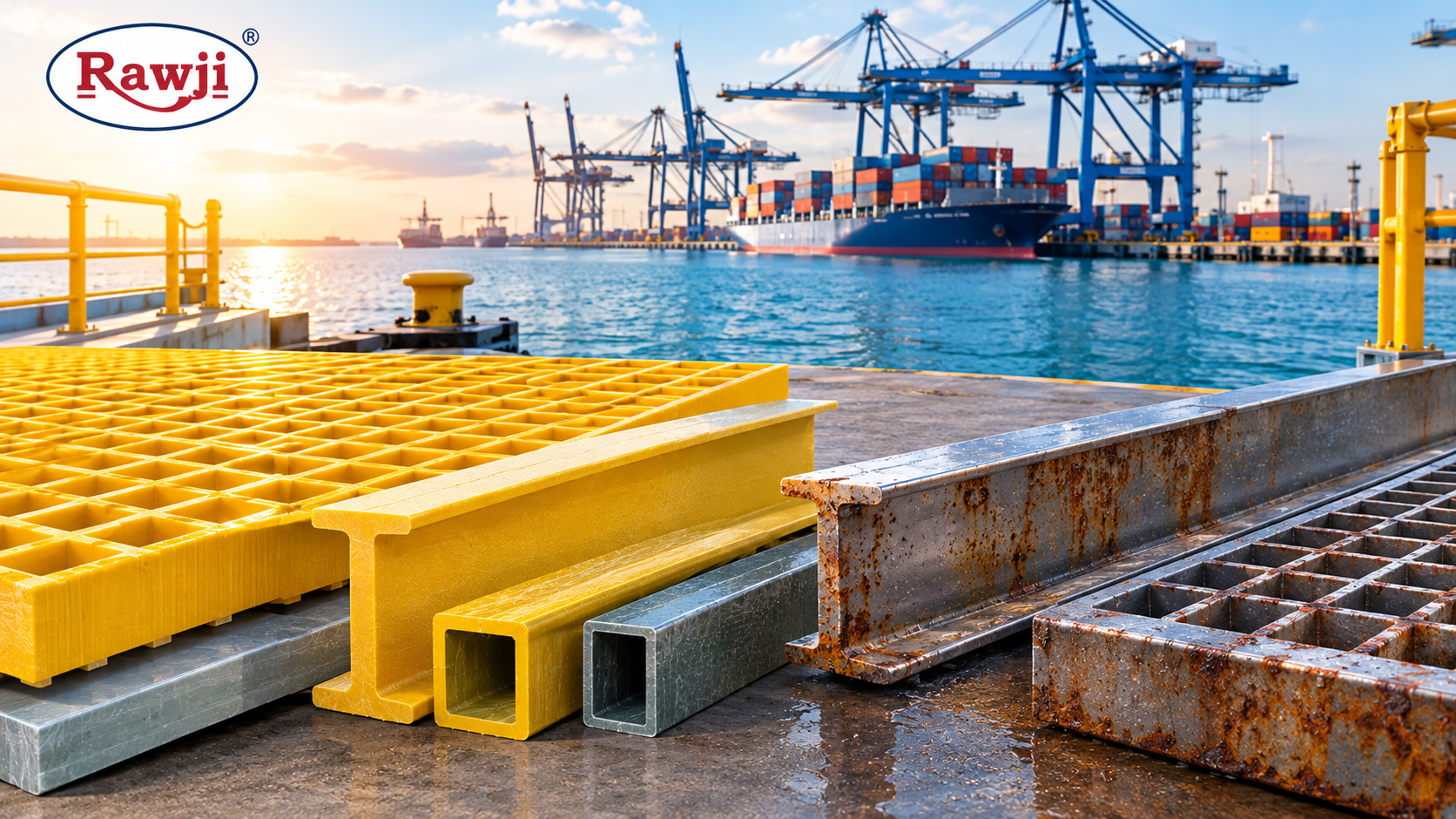
Traditionally, many drainage and trench applications have used cast iron or steel covers. However, GRP and FRP composite trench covers are increasingly considered where corrosion resistance, lighter handling and lower maintenance are important.
The right choice depends on the application and required load—not simply on whether one material is cheaper than another.
So what should an industrial or municipal buyer actually compare?
1. What Is an Industrial Trench Cover?
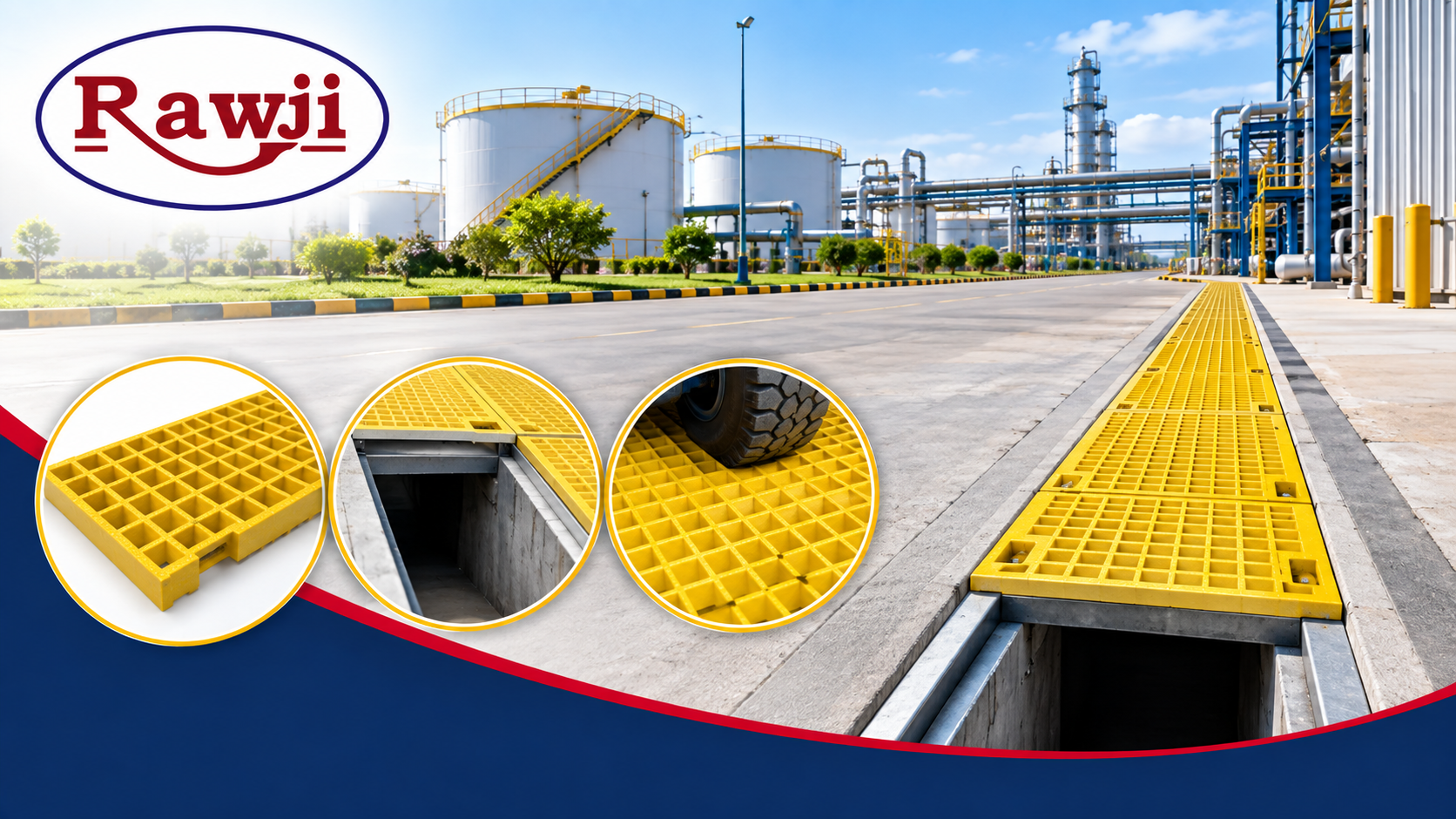
A trench cover is a removable or fixed cover installed over a recessed channel, drain, utility trench or service opening.
Typical applications include:
- Stormwater drainage channels
- Industrial effluent drains
- Electrical cable trenches
- Utility corridors
- Pumping stations
- Water-treatment facilities
- Wastewater-treatment plants
- Chemical-processing areas
- Manufacturing facilities
- Roadside drainage
- Municipal infrastructure
Depending on the installation, the cover may be exposed to pedestrians, maintenance equipment, forklifts or road vehicles.
That means load classification and installation conditions need to be established before selecting the cover.
2. Why Are Industrial Buyers Looking Beyond Cast Iron?
Cast iron has traditionally been used because it is strong and familiar.
But industrial environments introduce another problem:
corrosion.
A trench cover installed near wastewater, chemicals, salts or continuously wet areas may experience environmental degradation over time.
The U.S. EPA has documented hydrogen-sulfide-related corrosion in wastewater collection and treatment systems, including damage to metal components and infrastructure such as walkways and gratings.
This is one reason composite materials can be considered for certain drainage and utility applications.
GRP/FRP does not rust in the same manner as conventional ferrous metals, although the actual resistance of a composite product depends on its resin system, construction and environment.
3. Corrosion Is a Major Consideration in Wastewater Areas
Wastewater environments can be particularly aggressive.
Hydrogen sulfide can be generated under anaerobic conditions, and the resulting corrosion mechanisms can affect metal components and concrete infrastructure.
The EPA has specifically documented corrosion of wastewater collection and treatment infrastructure associated with hydrogen sulfide.
For this reason, a cover installed over a wastewater trench should not be selected purely on its initial purchase price.
Consider:
- Moisture exposure
- Wastewater chemistry
- Chemical concentration
- Temperature
- Cleaning chemicals
- Outdoor exposure
- Expected service conditions
For an FRP/GRP cover, the resin system should be evaluated against the actual chemical environment.
4. Weight Matters More Than Many Buyers Expect
A large industrial trench cover may need to be removed periodically for:
- Valve access
- Cable maintenance
- Drain cleaning
- Pump maintenance
- Inspection
- Utility work
This is where the weight of the cover becomes an operational consideration.
A lighter composite cover can make manual handling easier in applications where the design permits manual removal.
That does not mean every FRP cover can be safely lifted by one person.
The actual dimensions, thickness and construction determine the finished weight.
For larger covers, buyers should also consider:
- Lifting points
- Hinges
- Handles
- Removal tools
- Access frequency
- Safe manual-handling procedures
5. Load Capacity Should Come Before Price
This is probably the most important part of selecting an industrial trench cover.
A cover installed over a pedestrian walkway has a different requirement from one installed across a forklift route or vehicle roadway.
The buyer should identify the expected load before asking for a quotation.
Consider:
Pedestrian loading
Maintenance workers and routine foot traffic.
Equipment loading
Trolleys, maintenance equipment or machinery.
Forklift loading
Forklift wheels can create concentrated loads that are very different from uniform pedestrian loading.
Vehicle loading
Roadways and industrial yards can impose substantially higher axle loads.
OSHA's walking-working-surface requirements require surfaces to support the maximum intended load.
For construction applications, OSHA's cover provisions also address covers in roadways and vehicular aisles and specify load-capacity and securing requirements.
Therefore, never order a trench cover simply by saying:
"Give me a heavy-duty cover."
Instead provide:
- Clear opening
- Overall dimensions
- Support arrangement
- Expected vehicle/equipment
- Maximum load
- Traffic frequency
- Installation location
6. A Trench Cover Is Only as Strong as Its Support Arrangement
This is an important engineering point.
The cover itself is only one part of the system.
Performance can also depend on:
- Bearing width
- Frame design
- Support spacing
- Opening dimensions
- Seating arrangement
- Installation quality
A cover that is adequately designed for a small opening cannot automatically be assumed to have the same performance over a much larger opening.
Therefore, technical drawings should show the actual clear opening and support condition.
7. Theft Resistance Can Be an Important Requirement
Metal covers in publicly accessible areas can create another procurement concern: unauthorized removal or theft.
This can leave an open trench or drain exposed to pedestrians and vehicles.
For installations where unauthorized removal is a concern, buyers can specify features such as:
- Locking systems
- Hinged covers
- Security fasteners
- Fixed frames
- Anti-removal arrangements
The exact design should depend on the site.
Instead of simply marketing a cover as "theft-proof," the specification should clearly describe how the cover is secured against unauthorized removal.
8. Why Composite Covers Can Be Useful Around Electrical Trenches
Industrial facilities often have underground cable trenches and utility channels.
A non-metallic GRP/FRP cover can be useful in applications where electrical non-conductivity is a desired characteristic.
However, buyers should not treat "FRP" as automatically eliminating every electrical hazard.
The complete installation should still be evaluated by the project's electrical and safety professionals.
Where electrical infrastructure is involved, specify:
- Cable type
- Voltage environment
- Access requirements
- Cover dimensions
- Required load
- Fire requirements where applicable
- Electrical safety requirements
9. Don't Ignore Slip Resistance
Some trench covers are installed directly in pedestrian areas.
If rainwater, oil, mud or process liquids can accumulate on the surface, the walking surface becomes important.
A composite cover can be manufactured or specified with an appropriate textured or anti-slip surface.
For industrial applications, ask:
What surface finish is being supplied?
Rather than simply:
Is it anti-slip?
The answer should be connected to the actual operating environment.
10. GRP Trench Covers for Municipal Drainage
Municipal infrastructure has different requirements from an enclosed industrial plant.
A municipal drainage cover may be exposed to:
- Rain
- Road traffic
- Pedestrians
- Dust
- UV exposure
- Flooding
- Dirt
- Repeated maintenance access
The most important specification is therefore the actual traffic and loading condition.
A pedestrian drainage channel should not automatically receive the same cover specification as a road-crossing drain.
For municipal projects, the tender or engineering specification should clearly define:
- Load requirement
- Opening dimensions
- Frame details
- Surface finish
- Security arrangement
- Corrosion/environmental requirements
- Applicable standards
11. What Should You Ask an FRP Cover Manufacturer?
Before purchasing composite trench covers, ask the manufacturer for the following information.
Product Details
- Cover dimensions
- Clear opening
- Overall dimensions
- Thickness
- Weight
- Frame details
- Surface finish
Structural Information
- Load rating
- Test method
- Support span
- Maximum intended load
- Deflection information where applicable
Material Information
- Resin system
- Reinforcement
- Manufacturing process
- Chemical resistance
- UV-stabilisation options
Installation
- Frame requirement
- Bearing arrangement
- Fixing system
- Lifting arrangement
- Installation instructions
Documentation
- Technical datasheet
- Test reports
- Quality documentation
- Relevant conformity/certification documents
This information makes supplier comparison much more meaningful.
12. GRP Trench Covers Are Not Automatically Suitable for Every Road
This point deserves emphasis.
A composite cover should never be selected simply because it is labelled:
"Heavy Duty GRP."
The cover must be designed and tested for the intended loading and support conditions.
For example, a pedestrian trench cover and a cover positioned directly in a truck roadway can have very different engineering requirements.
OSHA's construction rules state that covers located in roadways and vehicular aisles must be capable of supporting at least twice the maximum axle load of the largest vehicle expected to cross them.
That is a specific U.S. construction requirement, so projects in India or other jurisdictions should also identify and follow the standards and specifications applicable to their own project.
13. GRP vs Cast Iron: Think About Lifecycle Cost
The purchase quotation is only the beginning.
A better comparison considers:
Purchase → Installation → Handling → Maintenance → Corrosion management → Replacement
Cast iron may be familiar and mechanically robust, but its suitability should be assessed against the environmental exposure and maintenance requirements.
GRP may provide advantages where:
- Corrosion is a concern
- Manual handling matters
- Non-metallic construction is desirable
- Chemical exposure is present
- Low-maintenance access covers are required
The appropriate material ultimately depends on the application and engineering specification.
14. Buyer Checklist for Industrial GRP Trench Covers
Before approving a purchase order, confirm:
☐ Clear opening measured
☐ Overall cover dimensions confirmed
☐ Maximum intended load identified
☐ Pedestrian/forklift/vehicle traffic identified
☐ Support span confirmed
☐ Frame specification confirmed
☐ Resin system identified
☐ Chemical exposure reviewed
☐ UV requirements reviewed
☐ Anti-slip surface specified
☐ Security/locking requirement considered
☐ Lifting/handling method considered
☐ Test documentation requested
☐ Installation requirements confirmed
☐ Applicable project standards confirmed
This checklist can prevent a common procurement problem: buying a product that looks correct on paper but does not match the actual site conditions.
Why Industrial Buyers Are Considering GRP Trench Covers
The shift from conventional metal covers to composite solutions is not simply about replacing one material with another.
It is about matching the cover to the environment in which it will operate.
For wastewater and chemical environments, corrosion resistance can be a major consideration. For maintenance-intensive facilities, weight can matter. For electrical trenches, non-metallic construction may be desirable. For vehicle areas, load capacity and support design become critical.
That is why the correct question is not:
"Is GRP better than cast iron?"
It is:
"Which cover specification is appropriate for this particular trench, environment and loading condition?"
That is the question an experienced supplier should help the buyer answer.
Conclusion
Industrial GRP trench covers can be considered for drainage channels, wastewater facilities, utility trenches, cable trenches and other applications where corrosion resistance, reduced handling weight and low-maintenance composite construction are important.
But product selection should always start with the engineering requirements.
Before replacing a cast-iron cover, confirm the opening size, load requirement, support arrangement, environmental exposure, surface finish, security requirements and applicable standards.
For industrial projects requiring FRP trench covers, composite covers, FRP manhole covers or other industrial FRP products, Rawji Exports can discuss the application and required specifications before supply.
For enquiries, contact Rawji Exports at +91 9920228162