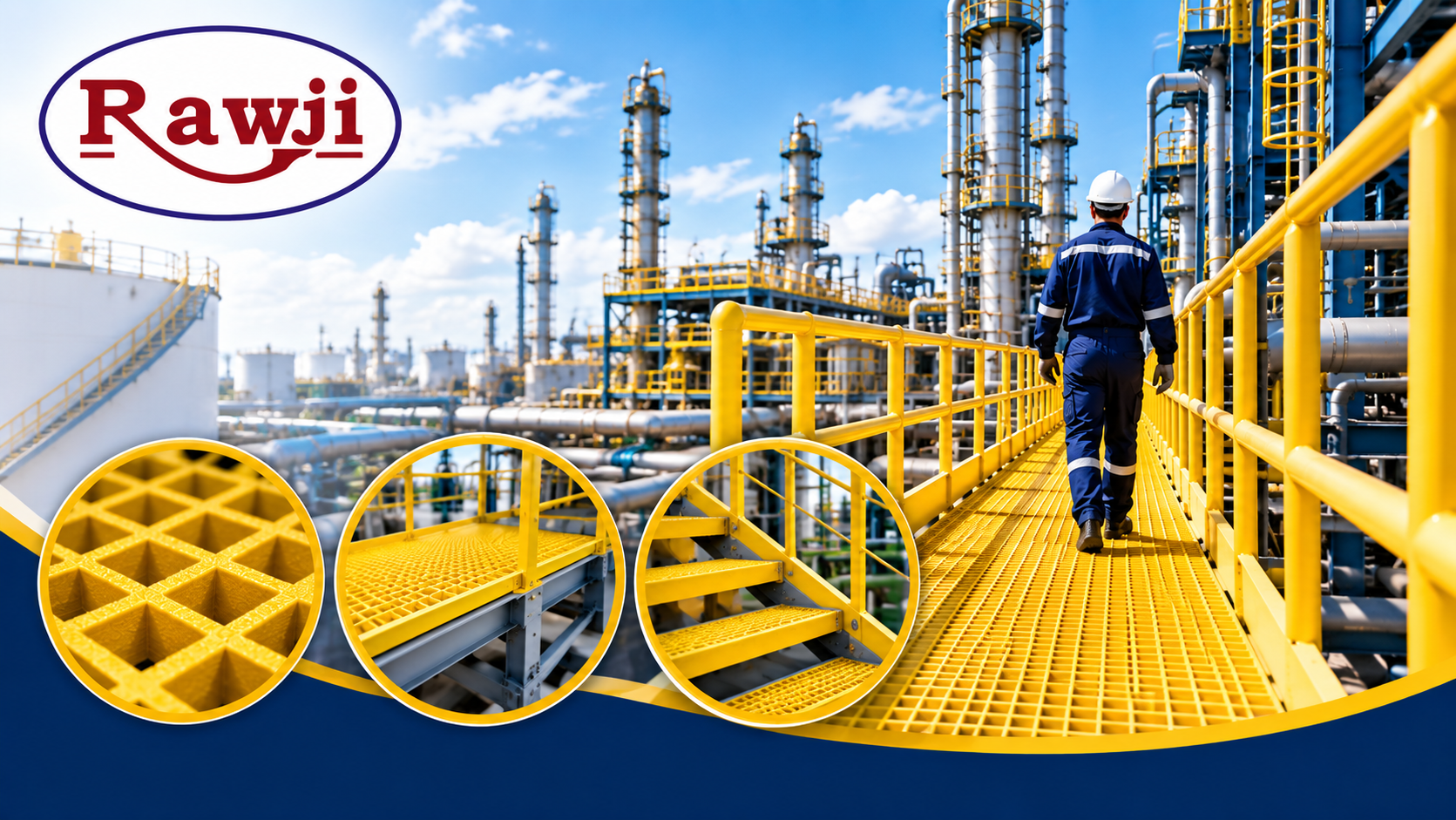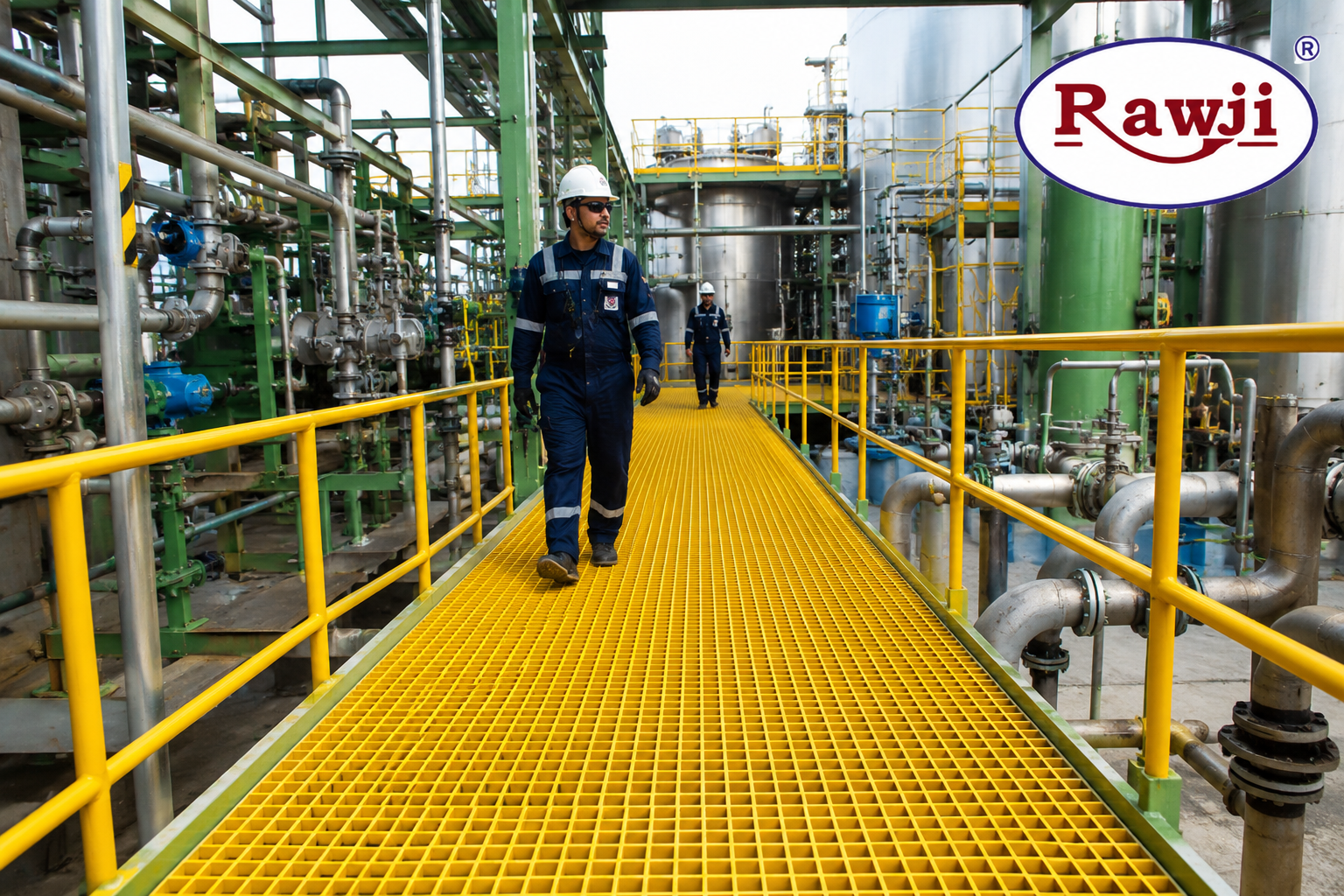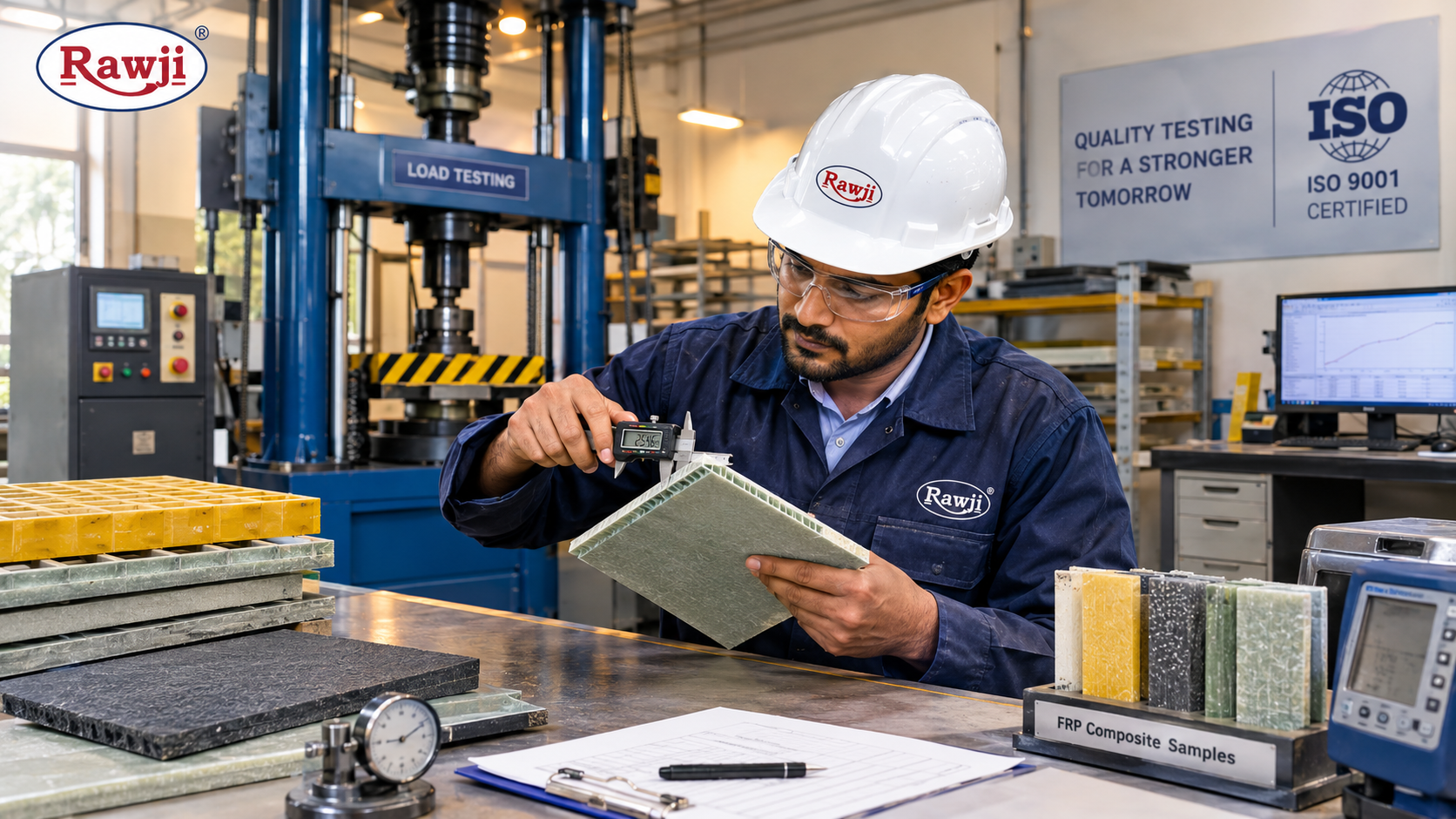
Industrial platforms have to handle more than regular foot traffic. They may operate around chemicals, moisture, electrical equipment, wastewater, coastal conditions, or outdoor machinery where conventional steel structures can require frequent protection and maintenance. This is where GRP structural profiles can offer a practical alternative for engineered industrial structures.
What Are GRP Structural Profiles?
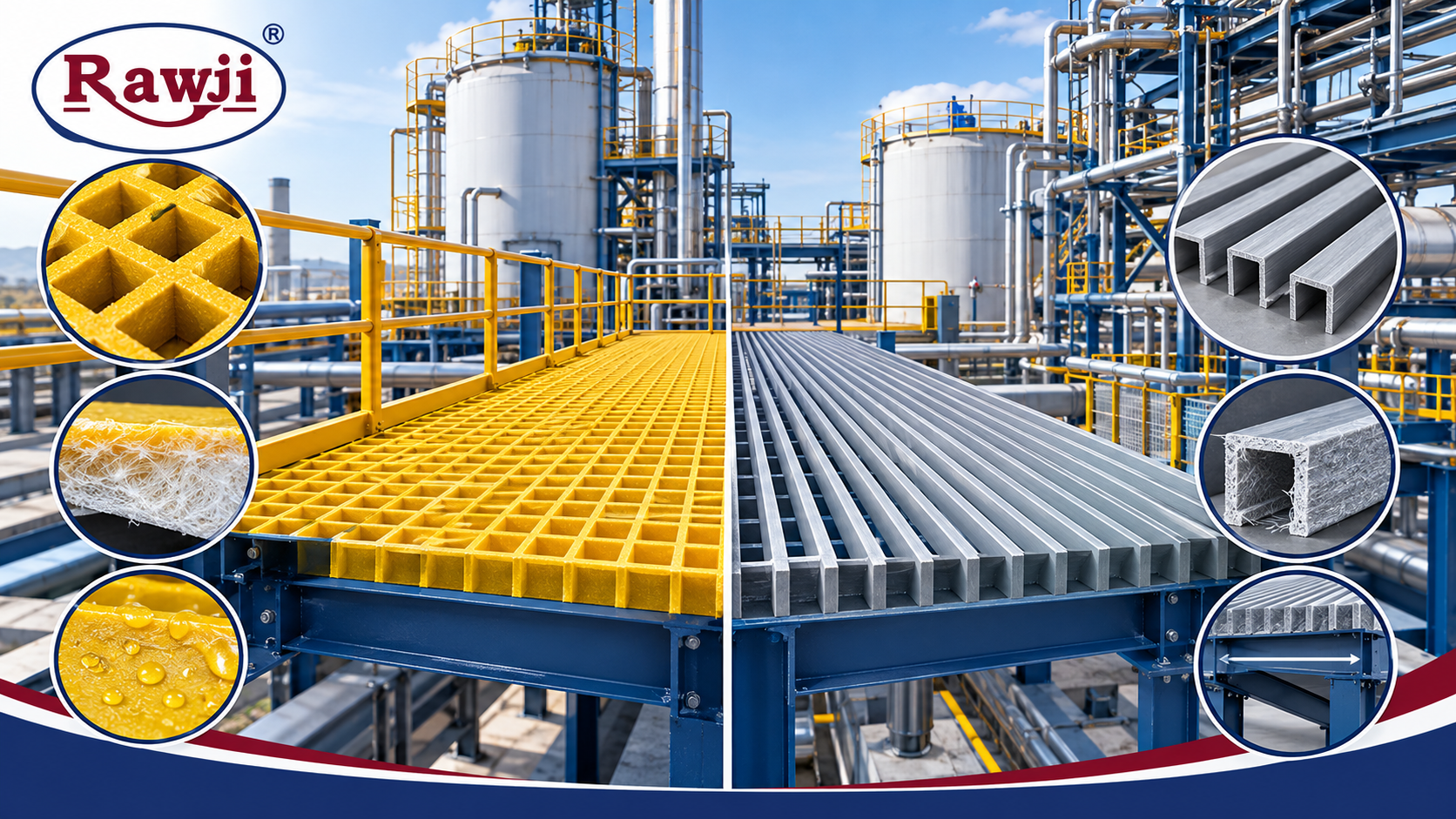
GRP, or Glass Reinforced Plastic, structural profiles are composite sections manufactured using glass-fibre reinforcement and resin. Common profiles include GRP I-beams, channels, angles, square or rectangular tubes, flat bars and other engineered sections.
Pultruded GRP profiles are particularly useful where consistent dimensions, corrosion resistance, lightweight construction and electrical non-conductivity are important.
Unlike a finished platform, the profile is a structural building component. Engineers can combine profiles with suitable grating, handrails, stairs, brackets and other components to create an application-specific access system.
Why Are GRP Profiles Used for Industrial Platforms?
The main reason is the operating environment.
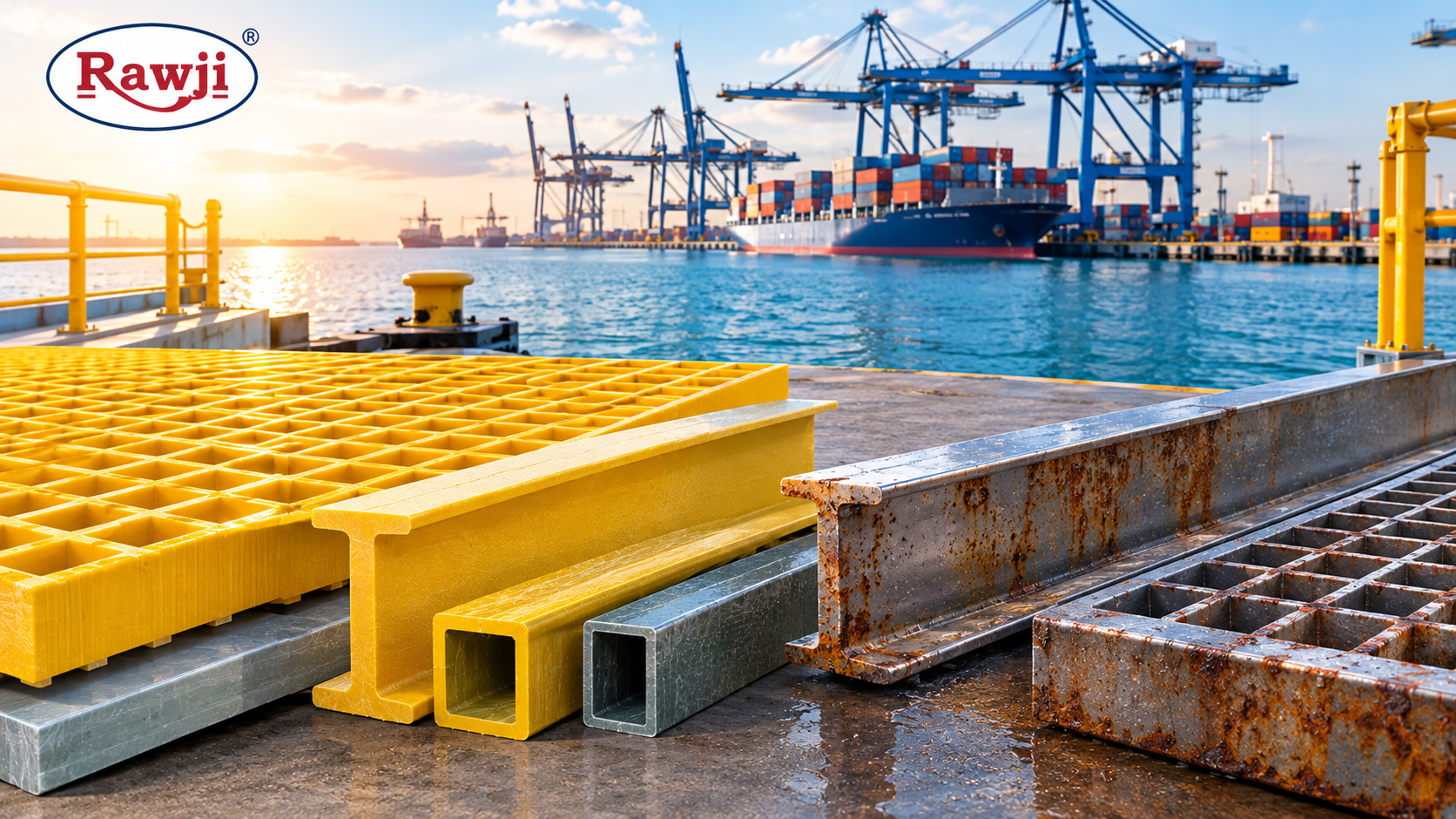
A steel platform in a chemical or wastewater facility can be exposed to moisture and aggressive chemicals. GRP does not eliminate every engineering consideration, but its inherent corrosion resistance can make it suitable for environments where conventional metals may require regular coating or corrosion protection.
GRP profiles also have a high strength-to-weight ratio. Their lower weight can make handling, transportation and installation easier compared with heavier metallic structures.
Another important advantage is electrical non-conductivity, which can be valuable around electrical infrastructure and other applications where conductive structural materials are undesirable.
Common Types of GRP Structural Profiles
Different structural requirements call for different profile geometries.
1. GRP I-Beams
I-beams are used where a stronger structural member is required for beams, frames and support structures.
2. GRP Channels
C or U channels can be used for framework, supports, edging and structural assemblies.
3. GRP Angles
L-shaped profiles are useful for bracing, framing, supports and fabrication work.
4. GRP Square & Rectangular Tubes
Hollow sections can be incorporated into lightweight frames, supports, enclosures and other fabricated structures.
5. GRP Flat Bars
Flat profiles can be used for mounting, reinforcement, brackets and structural detailing.
The correct profile should always be selected according to span, loading, support arrangement, environment and engineering requirements rather than simply choosing the largest available section.
Where Are GRP Structural Profiles Used?
GRP structural profiles can be incorporated into several industrial and infrastructure applications, including:
- Industrial access platforms
- Walkways and elevated work areas
- Water and wastewater treatment plants
- Chemical processing facilities
- Cooling tower structures
- Electrical and utility infrastructure
- Cable support structures
- Ladders and access systems
- Marine and coastal installations
- Industrial frameworks and support structures
These applications are consistent with the wider use of GRP structural systems in corrosive, wet and electrically sensitive industrial environments.
GRP Structural Profiles vs Steel: What Should Buyers Consider?
The decision should not be based only on purchase price.
Steel can provide excellent structural performance, but in aggressive environments it may require coatings, painting or other corrosion-protection measures. GRP can reduce exposure to corrosion-related maintenance because the composite material itself is resistant to many industrial environmental conditions.
GRP is also considerably lighter than conventional steel in many applications, which can simplify handling and installation. However, structural design, load calculations, connections and support spacing still need to be evaluated for the actual project.
For procurement teams, the better question is not simply “Is GRP cheaper than steel?”
The more useful question is:
“Which material provides the required structural performance with the lowest practical lifecycle maintenance for this environment?”
How to Select GRP Profiles for an Industrial Platform
Before ordering GRP structural profiles, buyers and engineers should consider:
Load requirement: Determine dead loads, live loads, equipment loads and any project-specific loading conditions.
Span and support spacing: Profile selection depends heavily on the distance between supports and the expected deflection.
Operating environment: Consider chemicals, water, humidity, UV exposure, temperature and other site conditions.
Resin system: Polyester, vinyl ester and other resin systems can have different performance characteristics and should be selected according to the application.
Profile geometry: I-beams, channels, angles and box sections serve different structural purposes.
Surface and finish: Depending on the complete system, surface requirements may need to be coordinated with the grating and access design.
Fabrication: Cutting, drilling, joining and installation requirements should be considered before finalising the profile specification.
Why GRP Works Well with Industrial Grating Systems
A platform is not only its structural frame. The supporting framework, walking surface, handrails, stairs and safety components need to work together.
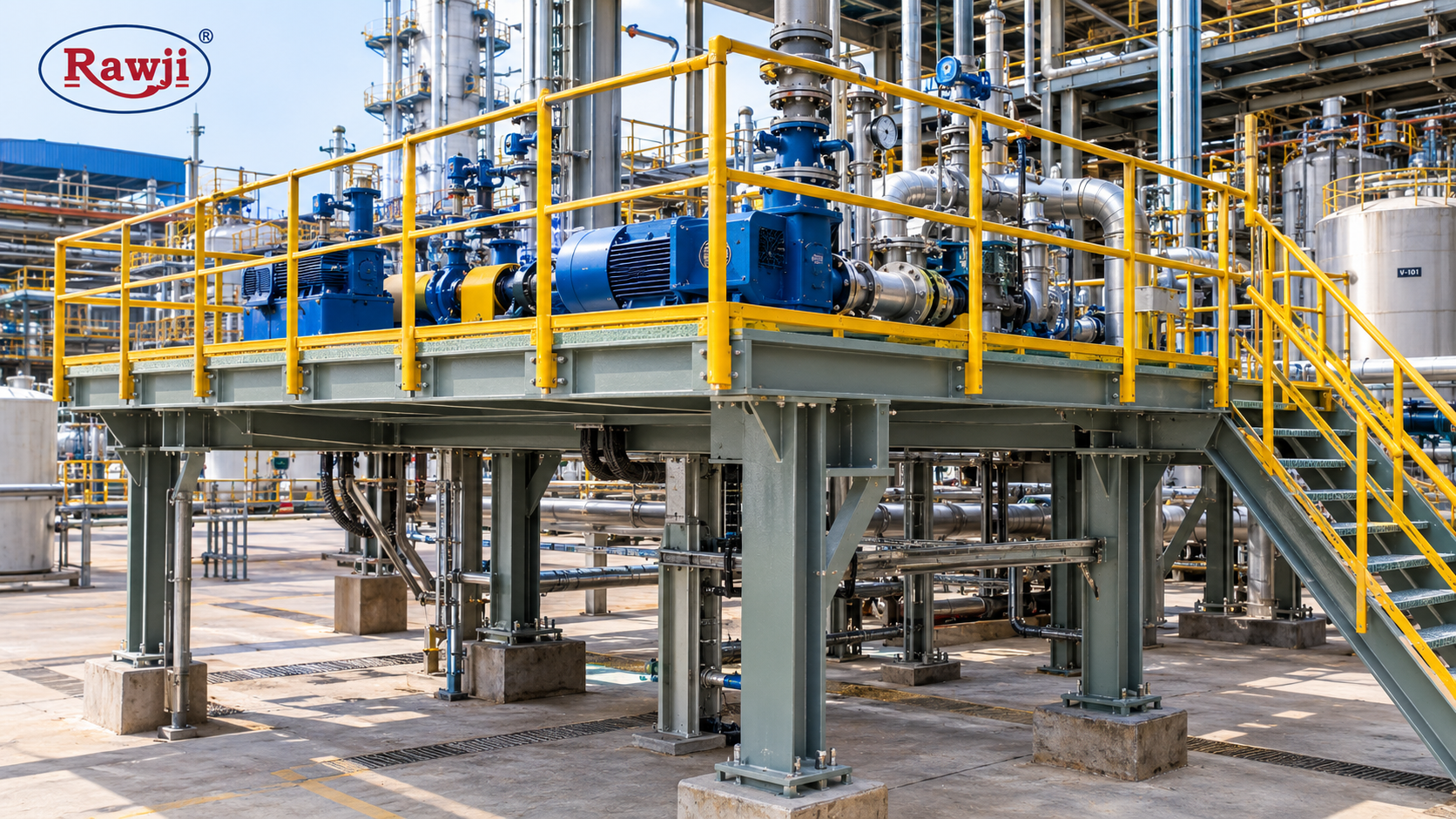
For example, a GRP structural framework can be combined with FRP/GRP grating to create a corrosion-resistant access platform. This integrated approach is already used across industrial access applications where the environment is demanding.
For buyers comparing complete solutions, this is important because specifying the structural profile separately from the walking surface can create compatibility and fabrication issues later.
Why Choose Rawji for GRP Structural Solutions?
For industrial buyers looking for GRP structural profiles and related composite products in India, Rawji Exports can be considered for project-specific requirements.
The company’s composite product range includes fiberglass structural profiles, FRP/GRP gratings, handrails, ladders, fencing and related industrial systems, making it possible to evaluate structural and access components together rather than as completely separate purchases. Rawji's catalogue also identifies fiberglass structural profiles alongside its broader GRP industrial product range.
If your requirement involves an industrial platform, walkway or structural framework, specifications should be discussed according to the required profile, dimensions, loading conditions, environment and quantity.
Frequently Asked Questions
What are GRP structural profiles?
GRP structural profiles are glass-fibre-reinforced composite sections used to construct structural frames, supports, platforms, walkways and other engineered systems.
Are GRP profiles suitable for industrial platforms?
Yes. GRP profiles can be used for industrial platforms when the profile, loading, span, connections and material specification are properly engineered for the application.
What types of GRP structural profiles are available?
Common sections include I-beams, channels, angles, square tubes, rectangular tubes and flat bars. Availability can vary by manufacturer and project requirements.
Are GRP profiles corrosion resistant?
GRP is inherently resistant to corrosion compared with many conventional metallic materials, which makes it useful in chemical, wastewater, marine and other demanding environments.
Are GRP structural profiles lighter than steel?
Yes, GRP generally offers a lower-weight structural solution than steel for comparable applications, which can simplify handling and installation. The actual weight and structural capacity depend on the profile design and specification.
Can GRP profiles be used with FRP gratings?
Yes. GRP structural profiles can form the supporting framework while FRP/GRP grating provides the walking surface, creating an integrated composite access platform.
Looking for GRP Structural Profiles for an Industrial Project?
The right GRP profile depends on more than dimensions. Load requirements, span, environment, resin system, fabrication and installation all influence the final specification.
For industrial platforms, walkways, support structures and corrosion-prone environments, discuss your project requirements with a GRP structural profiles manufacturer in India and request a specification-based quotation rather than selecting purely on price.