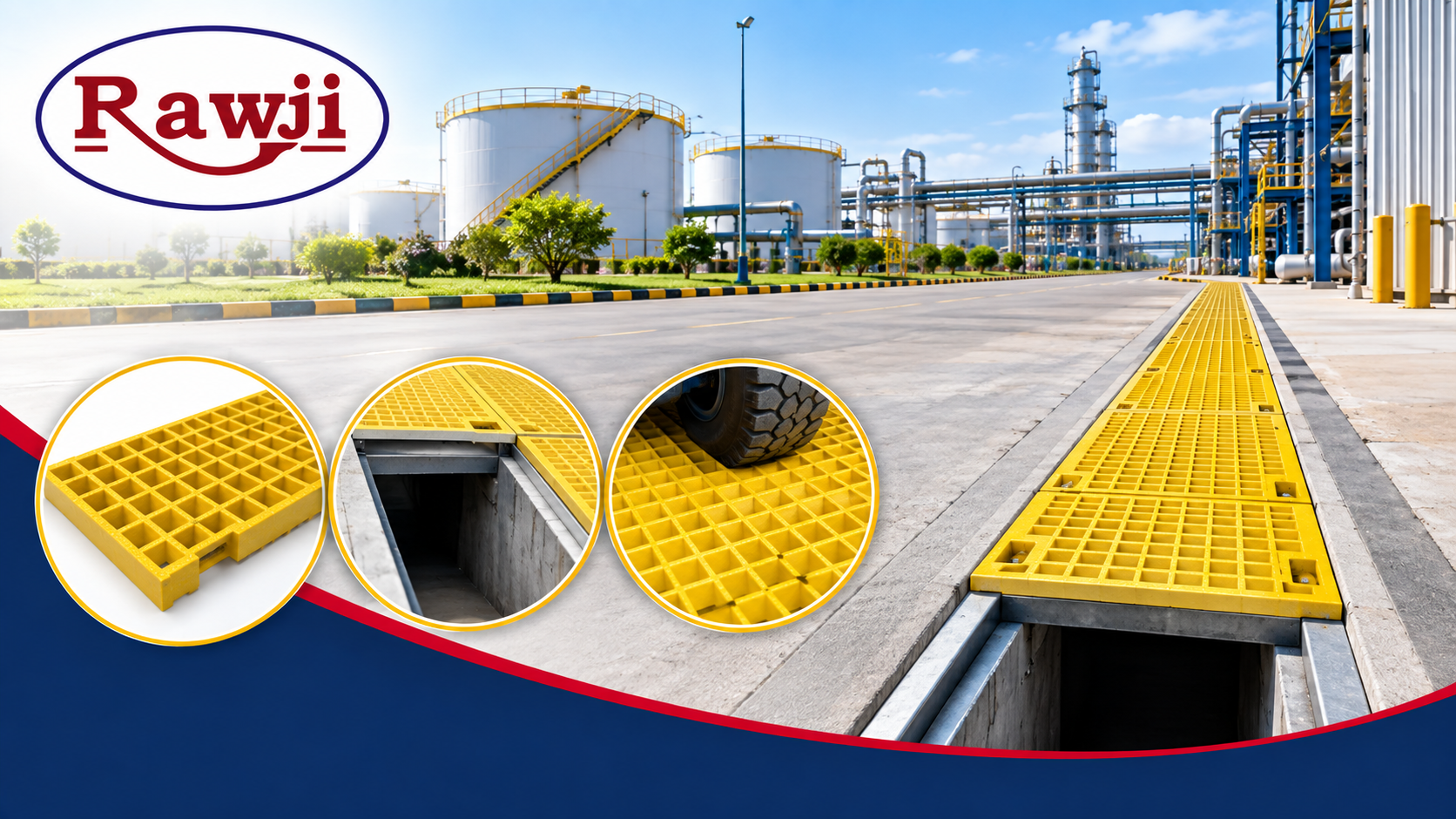
Choosing a manhole cover is more than a question of FRP vs cast iron. The right option depends on the required load rating, installation location, traffic conditions, corrosion exposure, handling requirements and security considerations.
FRP manhole covers have become an option for projects where corrosion resistance, lighter handling and reduced scrap value are important. Cast iron remains widely used for applications requiring traditional heavy-duty metallic covers.
So, which one should you specify?
The answer starts with the application and required load—not simply the material.
1. FRP Manhole Covers: Why Are They Being Considered?
FRP stands for Fibre Reinforced Plastic. It is a composite material in which reinforcing fibres are combined with a polymer matrix.
For manhole covers, this construction can provide useful characteristics such as:
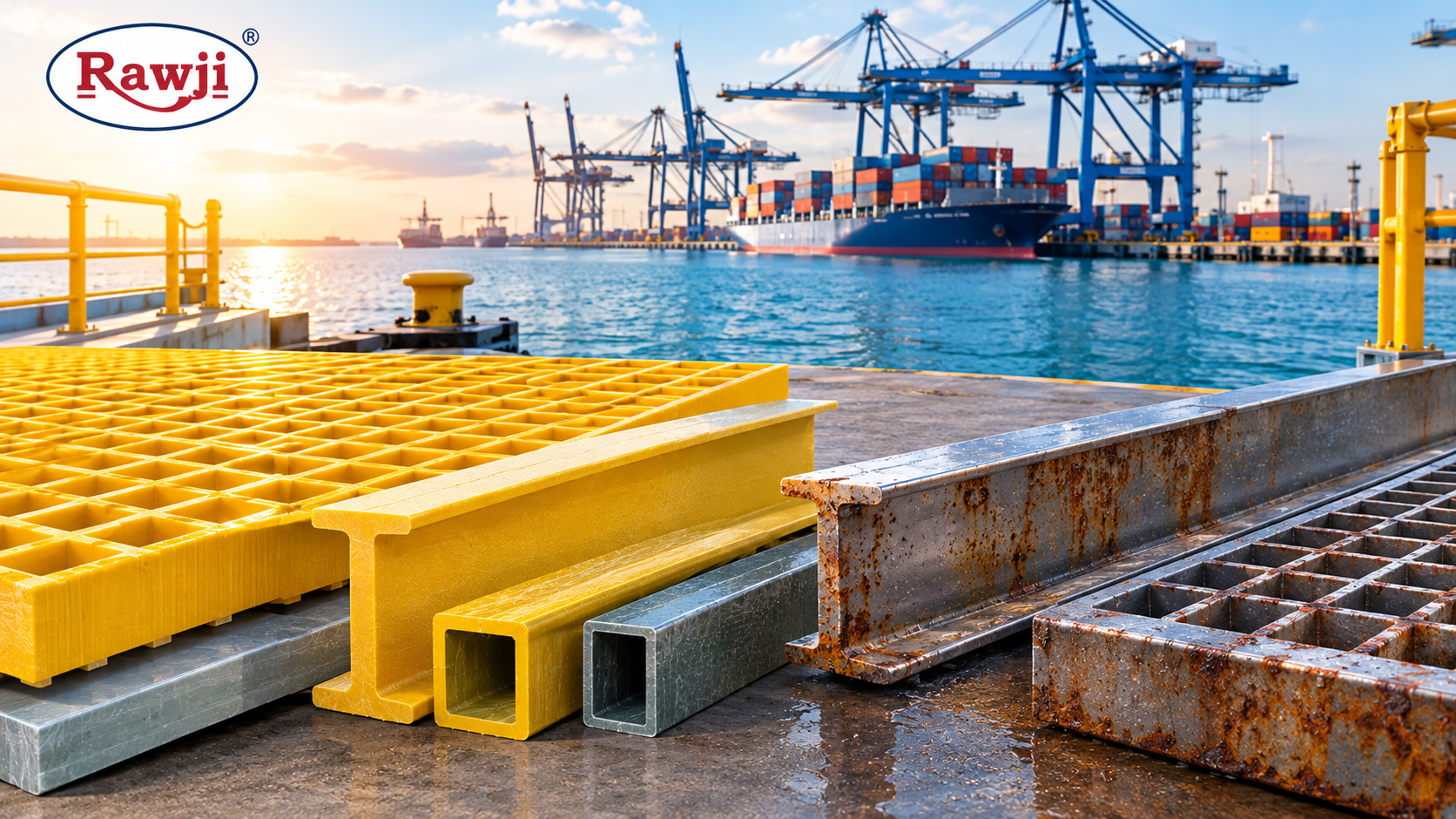
- Corrosion resistance
- Lower weight compared with many metallic alternatives
- Low maintenance
- Resistance to moisture
- Reduced scrap value
- Suitable options for industrial and infrastructure applications
This makes FRP manhole covers in India relevant for environments where corrosion, handling or theft are practical concerns.
2. What About Cast Iron Manhole Covers?
Cast iron has been used for manhole covers for many years and is familiar to contractors, municipalities and infrastructure teams.
Its key characteristics include:
- High mass
- Established use in road infrastructure
- Availability in heavy-duty designs
- Familiar installation practices
- Strong load-bearing capability when correctly specified
However, cast iron is also susceptible to corrosion in certain environments, and its weight can make lifting and handling more demanding.
The right comparison therefore depends on the specific application.
3. Load Rating Is More Important Than Material Name
One of the biggest mistakes in manhole-cover procurement is asking:
“Is FRP strong enough?”
A better question is:
“What load rating does my application require?”
A cover installed in a pedestrian area has different requirements from one installed in a road carrying frequent heavy vehicles.
Before ordering, identify:
- Pedestrian or vehicular application
- Expected traffic
- Wheel loads
- Installation location
- Support/frame arrangement
- Required load class or project standard
- Cover dimensions
A properly specified FRP manhole cover manufacturer in India should be able to provide the applicable load/performance information for the selected product.
Never select a cover based only on thickness or appearance.
4. Are FRP Manhole Covers Anti-Theft?
This is an important reason some infrastructure buyers consider FRP.
Traditional cast iron has scrap value, which can make theft a concern in certain locations.
FRP generally has much lower conventional scrap value than cast iron. That can reduce the financial incentive for theft.
However, “theft resistant” does not mean impossible to steal.
For projects where security is important, also consider:
- Locking mechanisms
- Cover-to-frame design
- Fixing arrangements
- Installation method
- Site security
- Local operating conditions
If theft is a known issue, discuss the complete anti-theft design with the supplier rather than relying only on the material.
5. Corrosion: Where FRP Can Have an Advantage
Cast iron can experience corrosion when exposed to moisture, salts, wastewater or aggressive environments.
FRP composite materials can provide significant resistance to corrosion, depending on the resin system and actual exposure.
This can make FRP attractive for applications such as:
- Wastewater treatment plants
- Chemical facilities
- Coastal infrastructure
- Industrial utility areas
- Drainage systems
- Water-treatment facilities
However, buyers should not interpret “corrosion resistant” as resistance to every chemical.
If the cover will be exposed to a specific chemical, provide the manufacturer with details about the chemical, concentration, temperature and exposure conditions.
6. Weight and Handling Matter
A manhole cover may need to be removed for inspection, cleaning or maintenance.
Because FRP covers are generally lighter than comparable cast iron covers, they can be easier to handle in many applications.
Potential benefits include:
- Easier manual handling
- Reduced lifting effort
- Faster access during maintenance
- Easier transportation and positioning
For large covers or frequently accessed utility points, handling can become an important lifecycle consideration.
7. Where Should You Consider FRP Manhole Covers?
FRP can be considered where the project places importance on:
Corrosion resistance + lower weight + reduced scrap value + low maintenance
Potential applications include:
- Industrial plants
- Water-treatment facilities
- Sewage-treatment plants
- Commercial developments
- Utility areas
- Coastal locations
- Pedestrian zones
- Infrastructure projects
For roadways and areas exposed to heavy traffic, the required load rating should be established first.
8. How Should Buyers Compare FRP Manhole Cover Manufacturers?
When comparing FRP manhole manufacturers in India, request the same information from every supplier.
Check:
Product Specification
- Cover dimensions
- Frame dimensions
- Construction
- Weight
- Surface finish
Performance
- Load rating
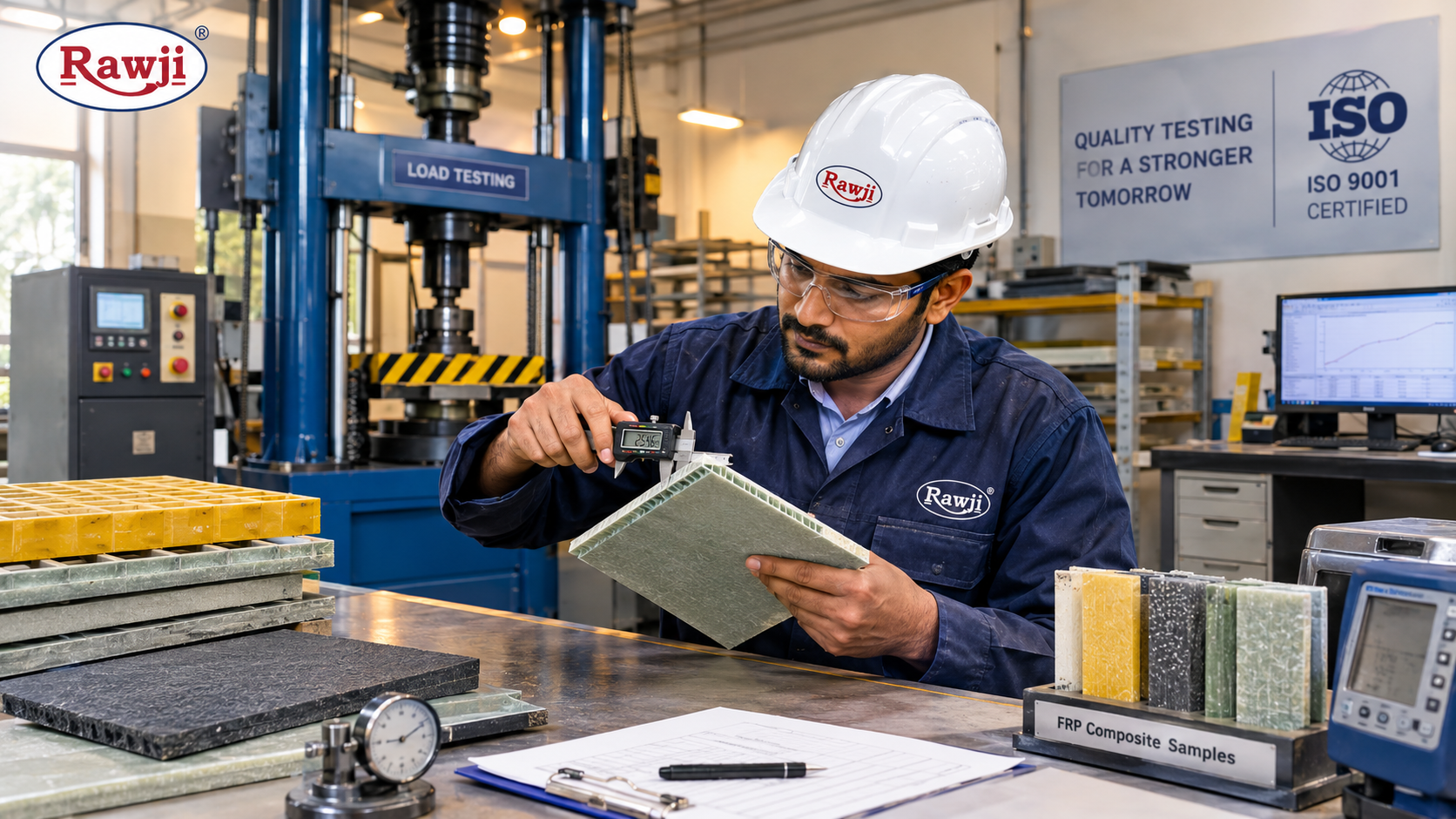
- Relevant testing
- Environmental suitability
- Slip-resistance requirements where applicable
Security
- Locking arrangement
- Cover/frame fixing
- Anti-theft features
Documentation
- Technical datasheet
- Test reports
- Applicable certifications
- Warranty
Commercial
- Quantity
- Price
- Delivery
- Transportation
- Installation requirements
This creates a like-for-like comparison instead of choosing a product based only on the quoted price.
9. FRP or Cast Iron: What Should You Choose?
There is no universal answer.
FRP may be considered when:
- Corrosion resistance is important
- Lower weight is beneficial
- Manual handling is frequent
- Scrap-value-related theft is a concern
- Low maintenance is desired
- The product meets the required load specification
Cast iron may be considered when:
- A traditional metallic solution is preferred
- Heavy-duty road applications require an appropriate cast-iron specification
- Existing infrastructure is designed around cast-iron covers
- Project specifications specifically require cast iron
The key is to match the material and product specification to the application.
Buyer Checklist Before Ordering
Before purchasing an FRP or cast iron manhole cover, confirm:
☐ Installation location
☐ Pedestrian or vehicular traffic
☐ Required load rating
☐ Cover and frame dimensions
☐ Corrosion/environmental exposure
☐ Surface/slip requirements
☐ Anti-theft requirements
☐ Locking/fixing arrangement
☐ Relevant testing/documentation
☐ Warranty
☐ Delivery requirements
Frequently Asked Questions
Are FRP manhole covers strong enough for vehicles?
Some FRP manhole covers are designed for vehicular applications, but suitability depends on the specific product's tested load capacity and the requirements of the installation. Always verify the load rating before specifying the cover.
Are FRP manhole covers better than cast iron?
FRP and cast iron have different characteristics. FRP can offer advantages such as lower weight, corrosion resistance and lower scrap value, while cast iron is a long-established material available in heavy-duty applications. Selection should be based on the project's requirements.
Are FRP manhole covers theft resistant?
FRP generally has lower scrap value than cast iron, which can reduce the economic incentive for theft. Additional locking or fixing mechanisms can provide further security where required.
Do FRP manhole covers rust?
FRP itself does not rust like iron or steel. However, the complete assembly may contain other components, such as frames or hardware, that require appropriate material selection.
How do I choose an FRP manhole cover manufacturer in India?
Compare manufacturers based on product construction, load rating, testing, dimensions, application experience, documentation, customisation, warranty and delivery—not simply price.
Final Takeaway
The choice between FRP manhole covers and cast iron should be based on the actual installation environment.
If corrosion, manual handling, maintenance or scrap-value-related theft are important considerations, FRP may be worth evaluating. If a project requires a traditional heavy-duty metallic solution, an appropriately specified cast iron cover may be considered.
In both cases, load rating comes first.
Before placing an order, confirm the required load class, dimensions, frame arrangement, environmental conditions and relevant product documentation.
For project-specific requirements, drawings, quantities or quotations, discuss the application directly with the manufacturer.
Need FRP Manhole Covers for Your Project?
Rawji Exports supplies composite FRP solutions for industrial, commercial and infrastructure applications.
For specifications, customised requirements or enquiries:
Call: +91 9920228162
Explore FRP manhole covers and other FRP products and services from Rawji Exports.