Remote mining, infrastructure and construction projects often operate far from established residential areas. Providing safe and practical accommodation for workers, supervisors and site engineers therefore becomes an important part of project planning.
Turnkey bunkhouse and living accommodation cabins offer a modular alternative to conventional site construction. These factory-built units can be designed around workforce capacity, sleeping arrangements, sanitation, electrical requirements, insulation and site conditions.
For projects in India, the right accommodation solution needs to balance durability, installation speed, thermal comfort, hygiene, mobility and long-term operating requirements.
What Are Turnkey Bunkhouse Accommodation Cabins?
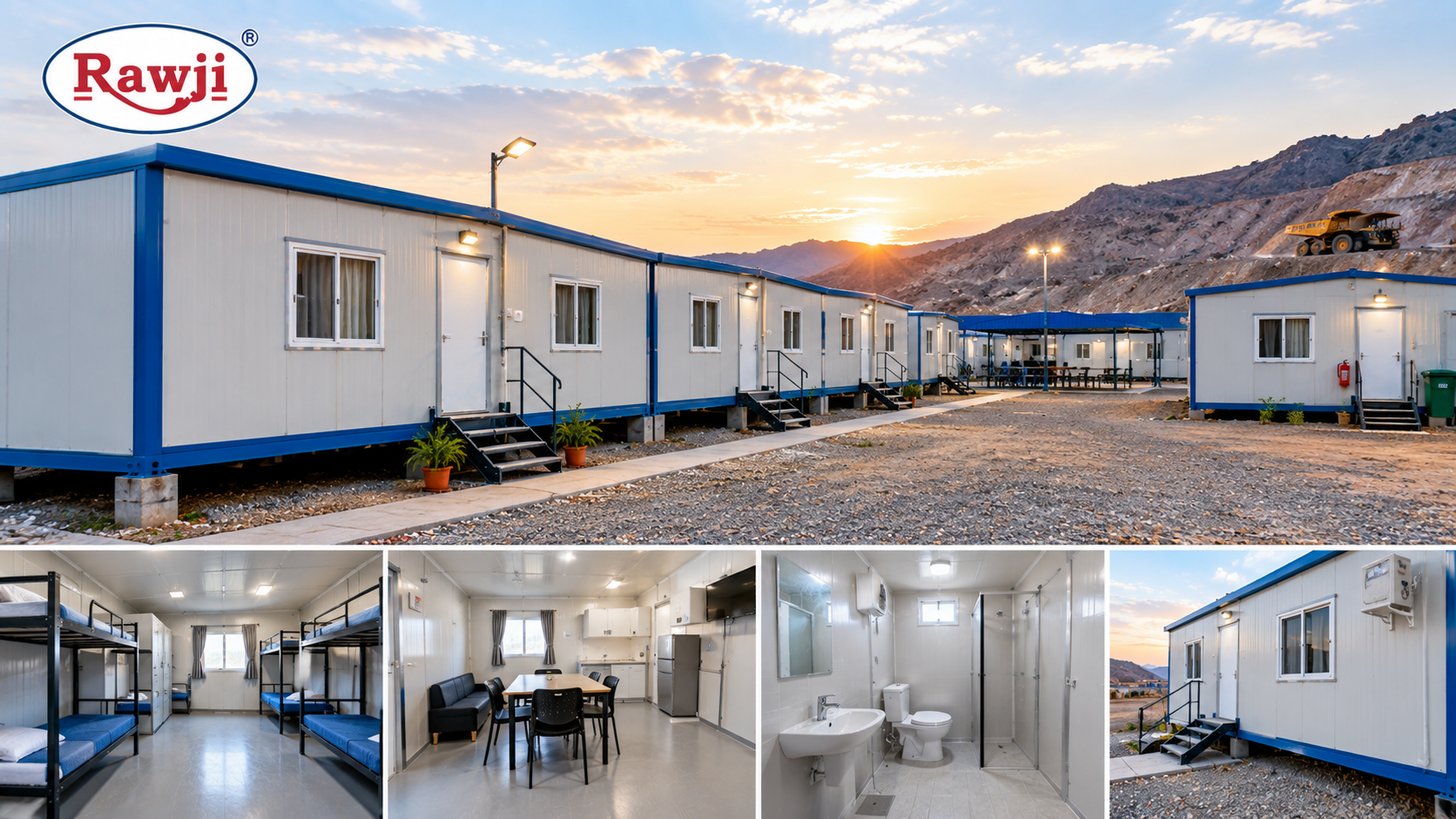
A turnkey bunkhouse cabin is a prefabricated accommodation unit designed to provide ready-to-use sleeping and living space at a project site.
Depending on the project specification, a bunkhouse can include:
- Bunk beds or individual beds
- Sleeping areas and partitions
- Electrical wiring and lighting
- Ventilation provisions
- Insulated walls and roofing
- Flooring systems
- Windows and doors
- Storage areas
- Attached or common washrooms
- Pantry or utility areas
- Air-conditioning provisions
The exact configuration should be selected according to the number of occupants, project duration, climate, transportation requirements and available site infrastructure.
Why Bunkhouse Cabins Are Important for Remote Projects
Mining camps, highways, renewable-energy projects and major infrastructure developments can operate in locations where conventional accommodation is limited.
Building permanent accommodation using conventional masonry construction may require considerable site preparation, materials, labour and time.
Prefabricated accommodation provides a different approach: much of the structure can be manufactured before reaching the project location, allowing site teams to focus on foundation or base preparation, positioning, connections and commissioning.
This makes modular accommodation particularly useful where project schedules and workforce deployment are closely connected.
Bunkhouse Cabins for Mining Camps
Mining operations can require accommodation for workers, supervisors, engineers, security personnel and maintenance teams.
A mining-site bunkhouse should be selected based on the site's environmental and operational conditions rather than simply its appearance.
Important considerations include:
- Number of occupants
- Sleeping arrangement
- Local temperature conditions
- Insulation requirements
- Ventilation
- Electrical load
- Water and drainage availability
- Transportation access
- Crane or lifting requirements
- Relocation requirements
- Maintenance accessibility
For larger mining operations, several accommodation modules can be combined with sanitation, dining, office and utility units to create a more organized temporary camp.
Turnkey Accommodation for Infrastructure Projects
Large infrastructure projects can involve highways, railways, bridges, renewable-energy installations, industrial developments and other projects spread across remote locations.
In these situations, portable accommodation cabins can support workforce deployment without requiring every project location to have permanent residential infrastructure.
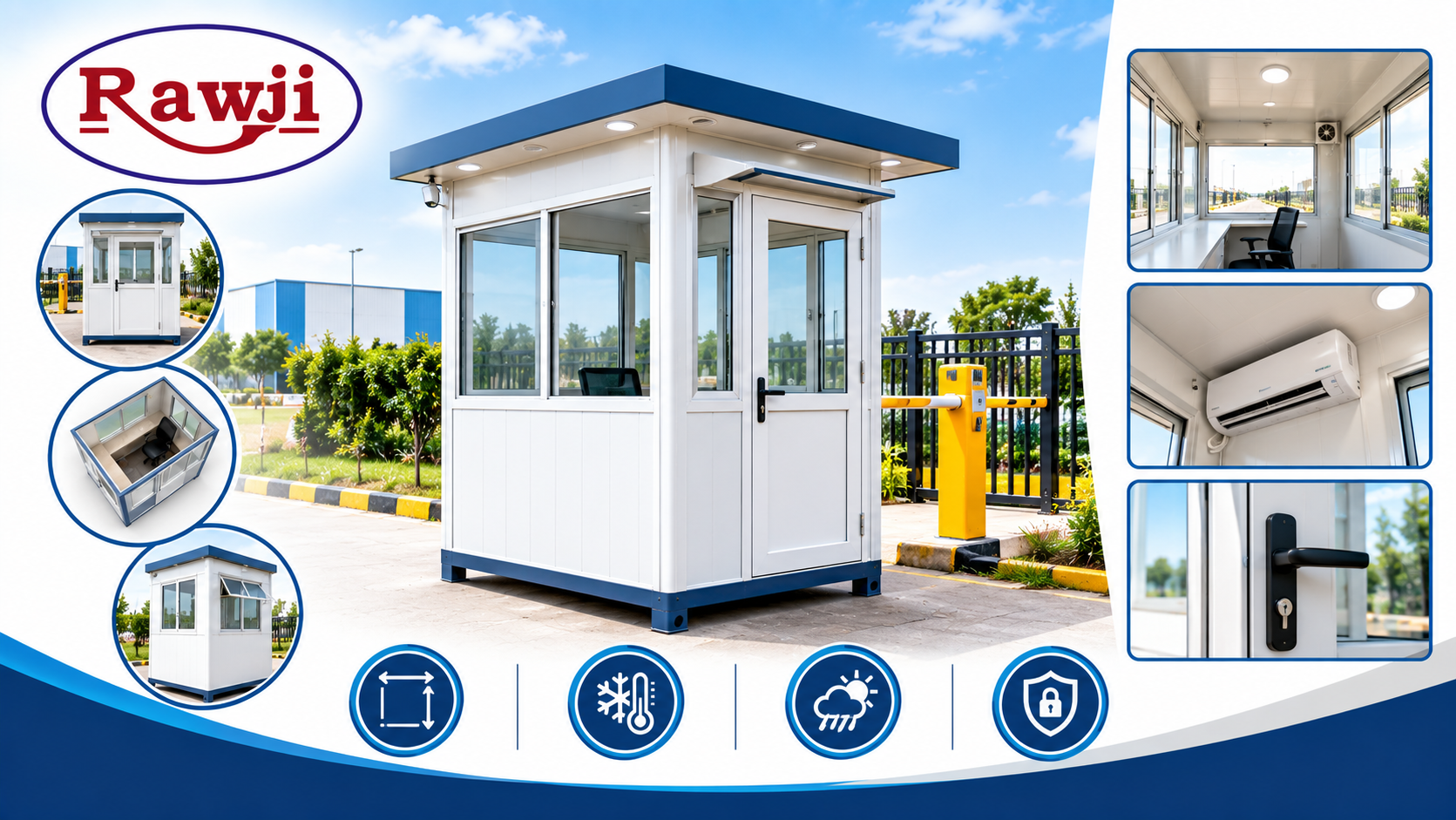
Rawji Exports manufactures customized metal portable cabins for construction, mining, industrial and infrastructure applications, with options for insulation, electrical fittings, partitions, windows, flooring and ventilation according to project requirements.
This allows accommodation layouts to be developed around the actual workforce and project requirements rather than relying on a single standard configuration.
Standard Bunkhouse Layouts
There is no single layout suitable for every project.
A compact bunkhouse may be designed for a small crew, while larger accommodation blocks can be configured for multiple workers.
Common layouts include:
Open Dormitory Layout
An open sleeping area with multiple bunk beds is useful when maximizing sleeping capacity within a limited footprint is a priority.
Partitioned Sleeping Layout
Internal partitions can provide greater privacy and separation between groups of occupants.
Staff Accommodation Layout
Separate rooms can be incorporated for engineers, supervisors or project staff where the accommodation hierarchy requires different room arrangements.
Integrated Washroom Layout
Washrooms and shower areas can be incorporated into the accommodation module or provided as separate sanitary blocks.
Modular Camp Layout
Multiple cabins can be arranged together with dedicated sleeping, dining, sanitation, office and utility modules.
The final arrangement should consider occupant capacity, circulation space, emergency access, ventilation and local project requirements.
Insulation and Thermal Comfort
Remote project sites can experience significant temperature variations.
For this reason, wall and roof insulation can be an important part of accommodation design.
Depending on the specification, insulated panels or other insulation systems may be used to help control indoor temperatures and improve occupant comfort.
The appropriate insulation should be selected according to:
- Local climate
- Cabin orientation
- Solar exposure
- HVAC requirements
- Wall and roof construction
- Expected occupancy
- Project duration
Insulation should therefore be treated as an engineering specification rather than simply a marketing feature.
Electrical and Utility Provisions
A living accommodation cabin needs more than sleeping space.
Electrical systems may need to support:
- LED lighting
- Fans
- Charging points
- General sockets
- Air-conditioning
- Water heaters
- Pantry equipment
- Emergency systems
- Site-specific electrical loads
Rawji's current portable-cabin specifications include concealed FRLS electrical wiring, MCB protection and configurable accommodation layouts for mining and construction applications.
Electrical design should always be finalized according to the project's electrical load, local regulations and applicable safety requirements.
Sanitation and Hygiene Planning
Worker accommodation should also consider sanitation from the beginning.
Depending on the project, the accommodation system can incorporate or connect with:
- Toilets
- Showers
- Wash basins
- Drainage
- Water supply
- Ventilation
- Wastewater systems
- Cleaning areas
For larger camps, sanitation should be planned according to workforce capacity rather than added as an afterthought.
A well-designed camp therefore considers sleeping, washing, dining, utilities and circulation as one integrated system.

The actual cost and schedule advantage depends on cabin specification, transportation, foundations/base preparation, utilities and site conditions.
What Makes a Good Mining Camp Accommodation Cabin?
A good bunkhouse should not be judged only by the lowest initial price.
Project teams should evaluate:
1. Structural design
The structure should be appropriate for transportation, lifting, installation and expected site conditions.
2. Thermal performance
Insulation and ventilation should match the local climate.
3. Interior configuration
Sleeping capacity should not compromise circulation and usability.
4. Electrical safety
Wiring, protection devices and electrical fittings should be appropriately specified.
5. Sanitation
Washrooms, drainage and water connections should be planned according to occupancy.
6. Mobility
If the project is temporary, relocation requirements should be considered during design.
7. Maintenance
Materials and finishes should be selected for practical cleaning and maintenance.
8. Manufacturer capability
A manufacturer capable of handling customized layouts can be more useful than a supplier offering only fixed-size cabins.
Why Customization Matters
A highway construction camp may require a different configuration from a mining camp.
Similarly, an accommodation cabin for six workers may have completely different requirements from a larger workforce facility.
Rawji Exports offers customized portable cabins with different dimensions, layouts, insulation, partitions, windows, electrical fittings and interior arrangements.
The company's broader FRP and portable cabin product range includes metal portable cabins, FRP security cabins, FRP doors, gratings, roofing sheets and other industrial solutions.
Mining Site Portable Cabins in India
For Indian mining and infrastructure projects, cabin design must account for transportation distance, site accessibility, climate and installation conditions.
Rawji's current mining-site cabin offering includes modular accommodation configurations such as 10 × 10 ft, 20 × 10 ft, 30 × 10 ft and 40 × 10 ft, subject to project requirements. Its published specifications also describe structural steel framing, insulated sandwich wall panels and lifting provisions for site deployment.
This type of modular approach can be useful for projects where workforce requirements change during different construction or operational phases.
Applications of Bunkhouse & Living Accommodation Cabins
Turnkey accommodation cabins can be used for:
- Mining camps
- Highway construction projects
- Railway projects
- Bridge construction sites
- Dam and irrigation projects
- Solar power projects
- Wind-energy projects
- Oil and gas projects
- Industrial expansion projects
- Remote infrastructure sites
- Large construction camps
- Temporary workforce accommodation
- Site staff accommodation
The exact use case determines the required cabin specification.
How to Choose a Bunkhouse Cabin Manufacturer
Before selecting a supplier, procurement teams should ask:
- Can the manufacturer provide customized layouts?
- What structural materials are used?
- What insulation options are available?
- Can electrical systems be integrated?
- Can washrooms be incorporated?
- How will the cabin be transported and lifted?
- Can multiple modules be supplied for a larger camp?
- What documentation and technical specifications are provided?
- What is included in installation?
- Can the manufacturer support PAN India delivery?
These questions help compare suppliers based on project suitability rather than price alone.
Why Rawji Exports for Portable Accommodation Solutions?
Rawji Exports has been manufacturing industrial FRP and portable cabin solutions since 1962. Its current product range includes metal portable cabins used for construction, industrial, infrastructure and mining applications.
The company provides customized cabin configurations with options for insulation, electrical systems, partitions, windows, flooring and ventilation. Its manufacturing base is in Bhiwandi, Maharashtra, with PAN India supply capability.
For projects requiring different site infrastructure products, Rawji also manufactures FRP doors, FRP gratings, roofing sheets, manhole covers and security cabins.
Frequently Asked Questions
What is a bunkhouse cabin?
A bunkhouse cabin is a prefabricated accommodation unit designed primarily for worker or staff housing. It can include sleeping areas, bunk beds, insulation, electrical systems, ventilation and other living facilities.
Are bunkhouse cabins suitable for mining sites?
Yes. Bunkhouse cabins can be designed for mining camps and remote project locations, subject to appropriate structural, insulation, electrical, transportation and site specifications.
Can bunkhouse cabins be customized?
Yes. Cabin dimensions, sleeping arrangements, partitions, insulation, electrical fittings, windows, flooring and ventilation can be customized according to project requirements.
Can washrooms be included?
Yes. Depending on the design, washrooms and sanitary facilities can be integrated into accommodation modules or supplied as separate modular units.
Are portable accommodation cabins relocatable?
Many modular cabins are designed with transportation and relocation in mind. However, relocation capability depends on the structural design, lifting provisions, base connection and transportation method.
How much does a bunkhouse cabin cost in India?
There is no single fixed price. Cost depends on cabin dimensions, structural specification, insulation, interior fittings, electrical systems, sanitary facilities, quantity, transportation and customization.
Can Rawji supply cabins for large workforce projects?
Yes. Rawji provides customized portable cabin solutions for industrial, construction, infrastructure and mining projects, with configurations designed around project requirements.
Conclusion
Turnkey bunkhouse and living accommodation cabins provide a flexible way to establish workforce housing at remote mining, infrastructure and construction sites.
The best solution is not necessarily the cheapest cabin. Procurement teams should evaluate structural strength, thermal insulation, sleeping capacity, sanitation, electrical safety, mobility, customization and manufacturer support before finalizing a specification.
For Indian projects requiring customized portable accommodation, Rawji Exports provides modular metal cabin solutions for construction, mining, industrial and infrastructure applications, with customization and PAN India supply support.
Need a customized bunkhouse or mining-site accommodation cabin? Contact Rawji Exports for project-specific requirements and quotation.